
Last updated November 23, 2026
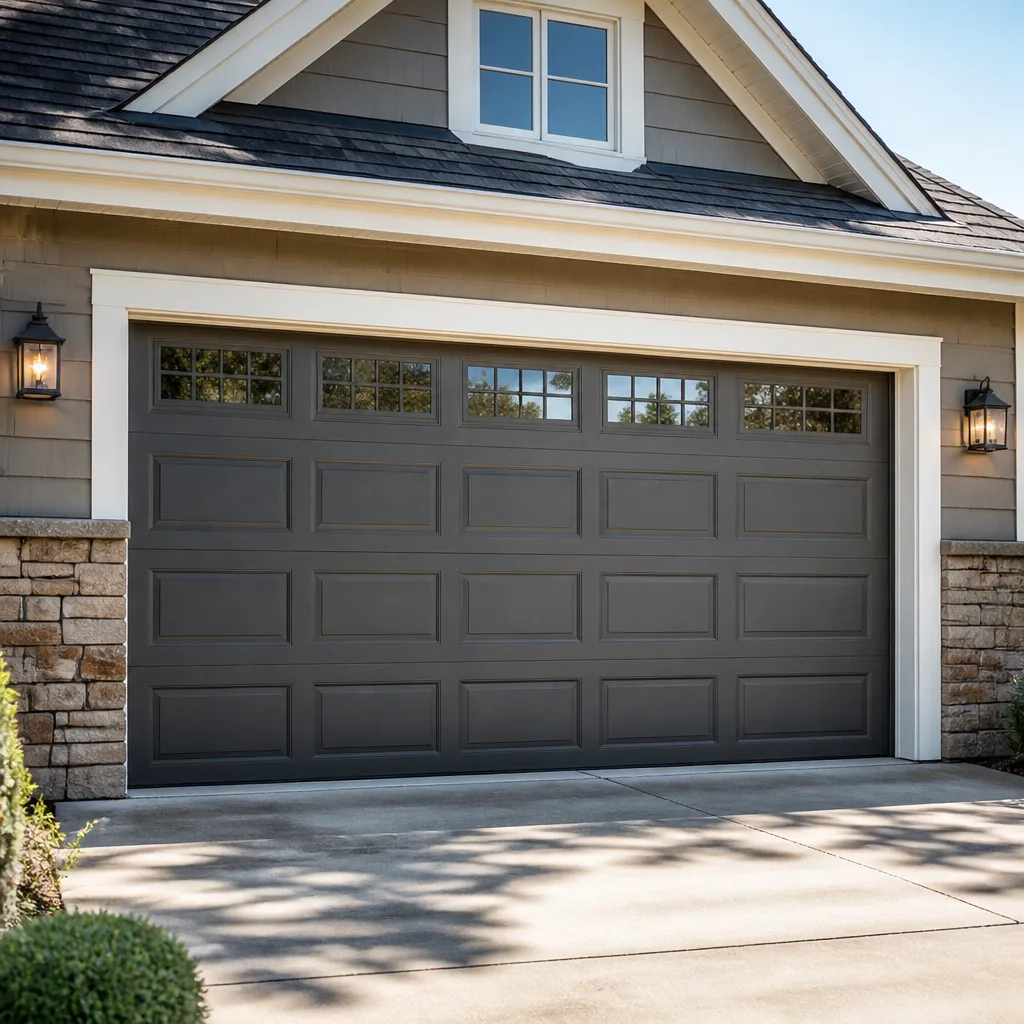 Raised-panel steel
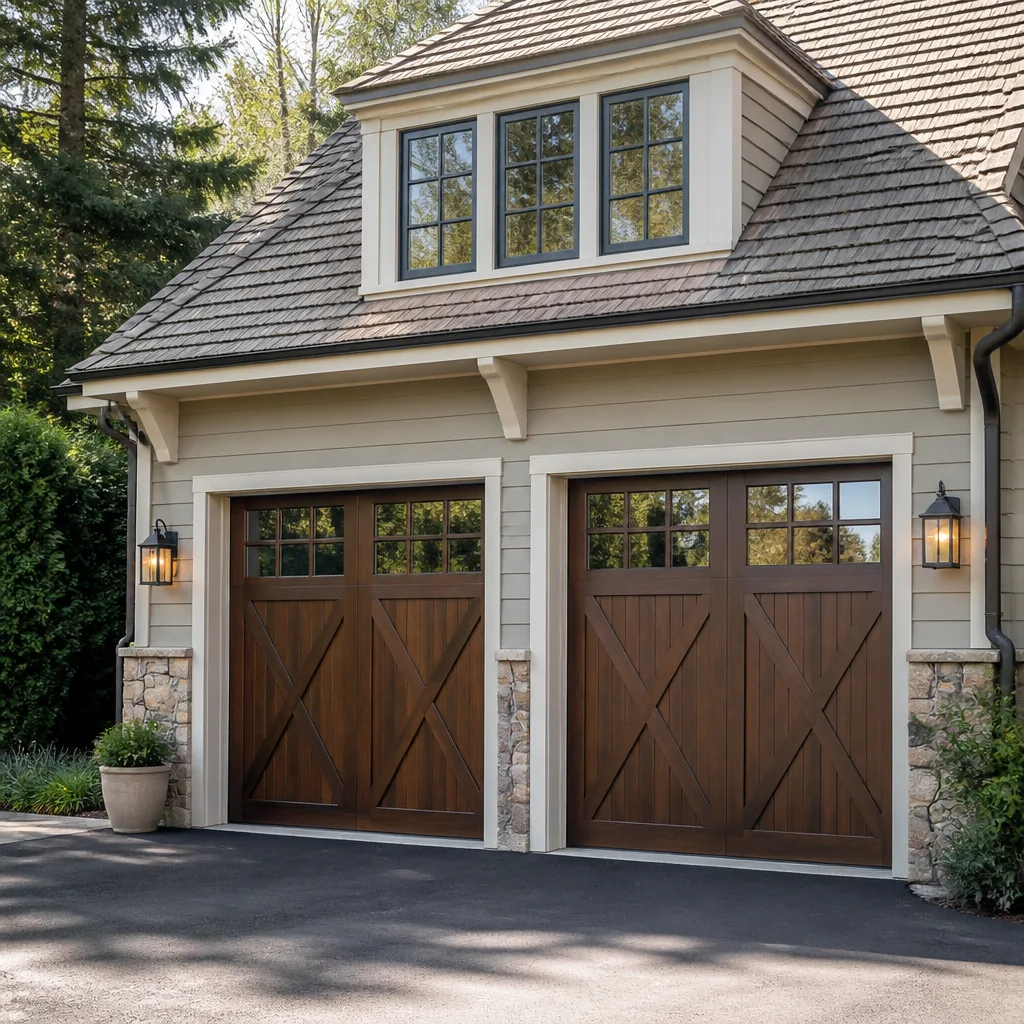 Carriage house
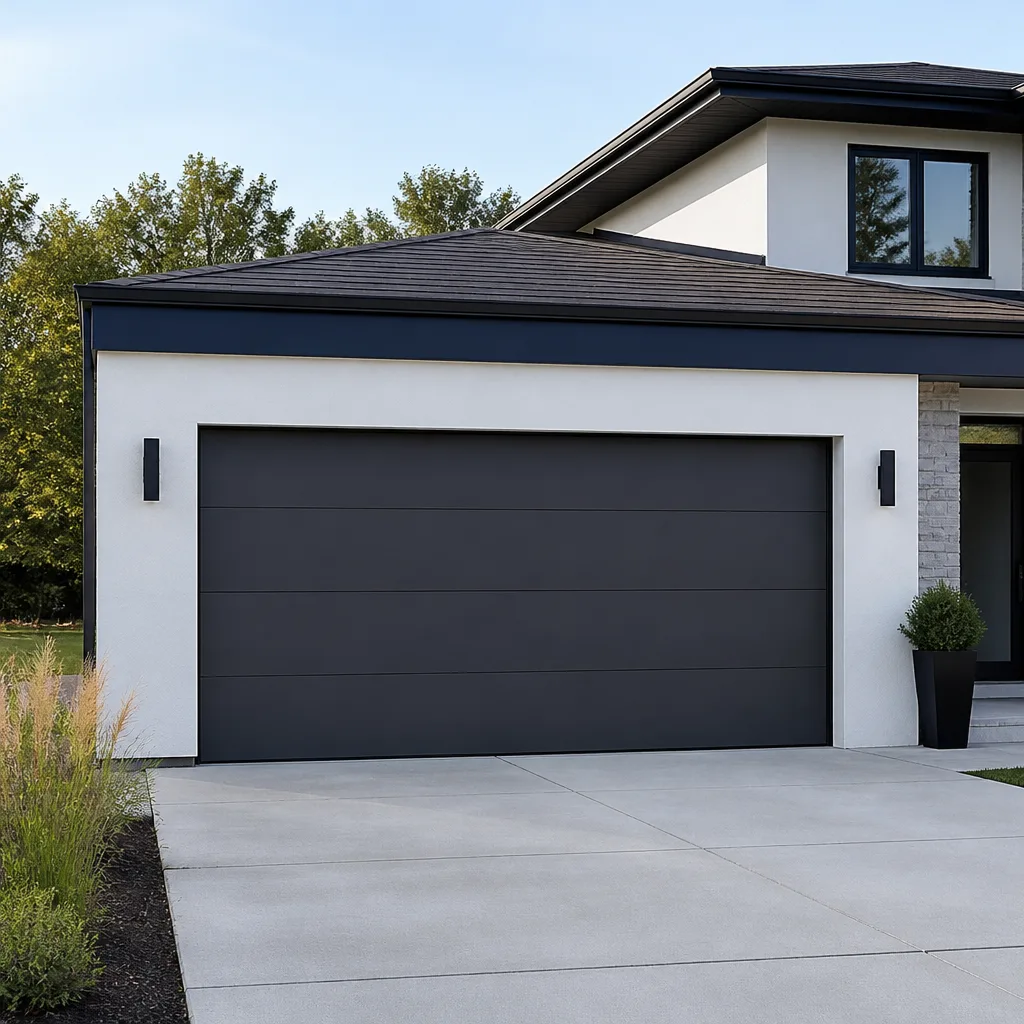 Modern flush
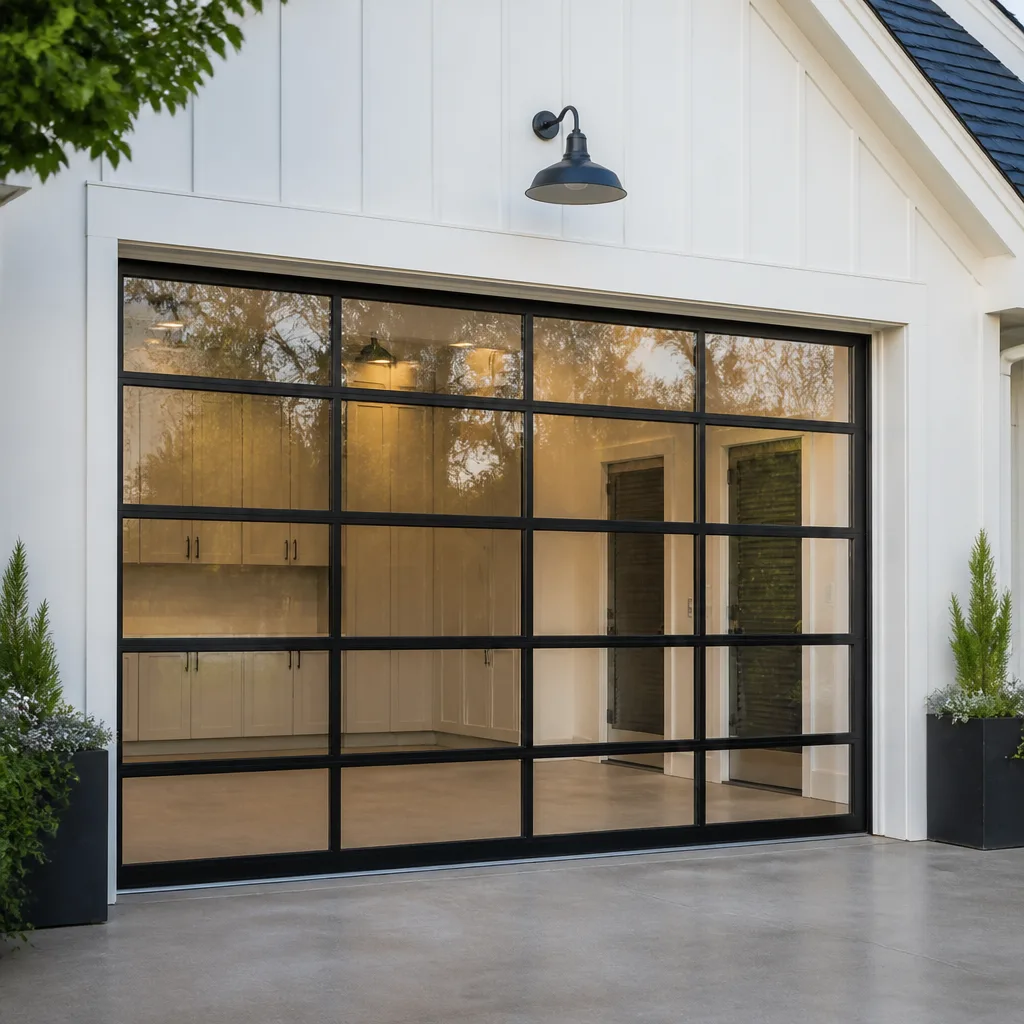 Full-view glass
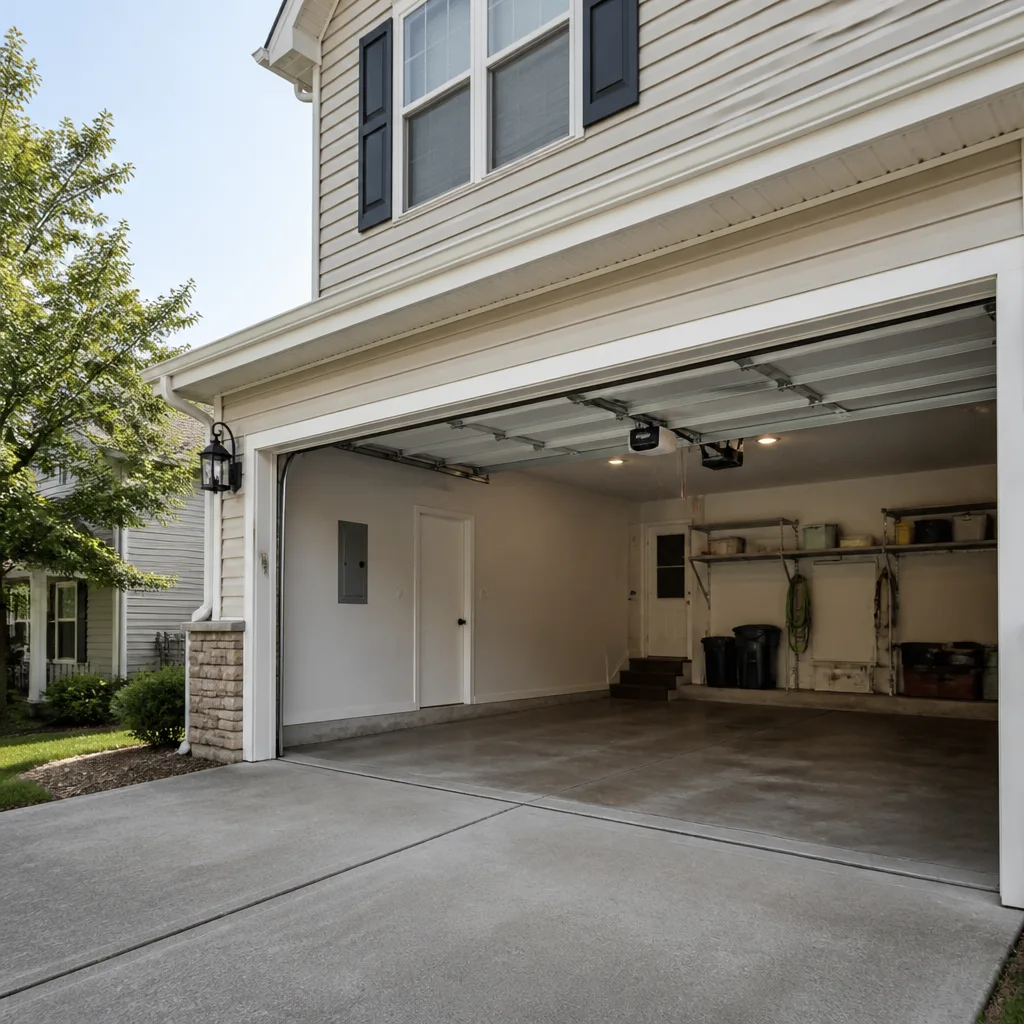 LiftMaster openers
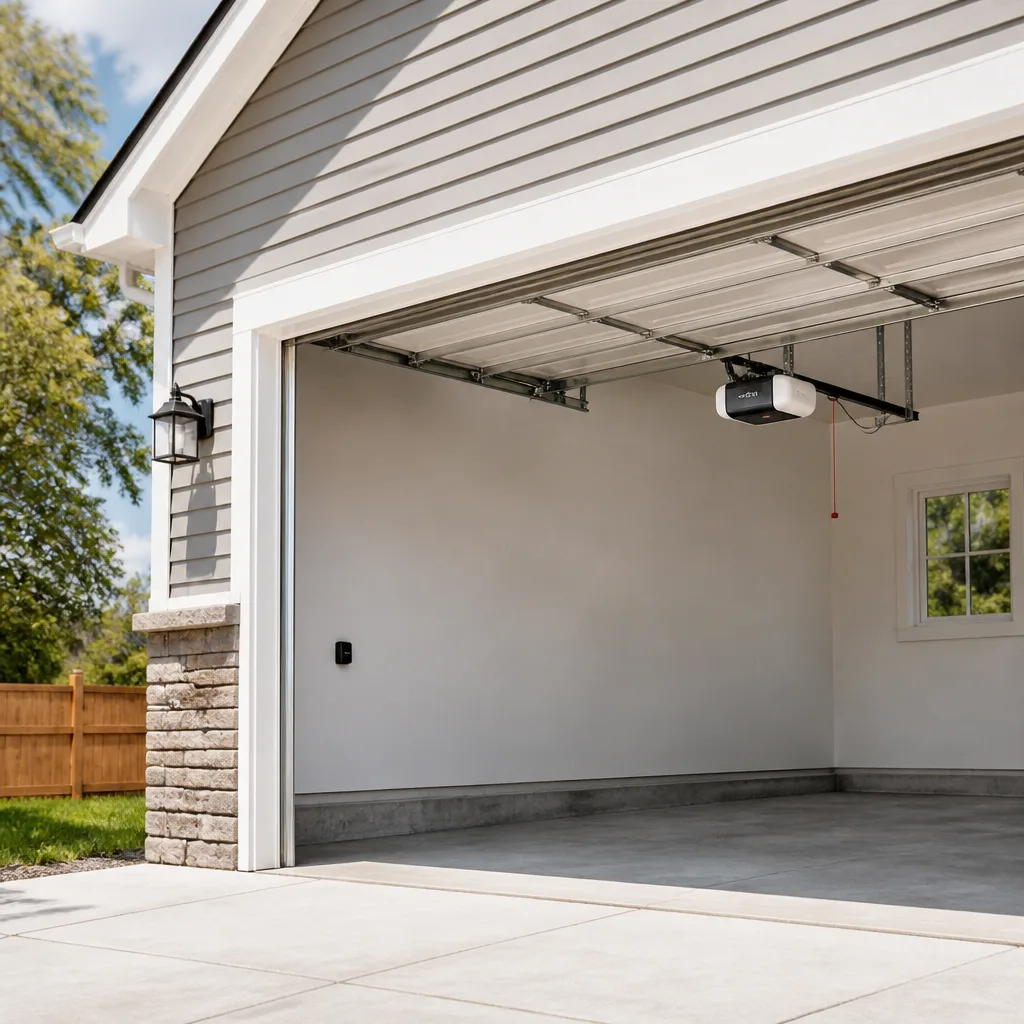 Chamberlain openers
Full 25-point door and opener safety check with every visit - springs, cables, rollers, tracks, and your LiftMaster or Chamberlain opener included
You get a price before we start. It does not change when the pro arrives.
Get your free estimateThe Complete Guide to Garage Doors in Palm Harbor
Most garage doors sold in big-box stores aren’t rated for Florida’s wind-load zones. That’s the part homeowners rarely hear on the showroom floor, and it’s the part that matters most here. A door that looks perfectly fine when you’re standing in front of it could fail a Pinellas County inspection, or worse, fail during a storm. Palm Harbor sits in a wind zone that punishes equipment chosen for looks or price alone.
This guide walks through what actually decides a good garage door decision in Palm Harbor: wind-load ratings first, material second, mechanics third, and opener drive type to match. You’ll get a clear repair-versus-replace decision tree, the maintenance items that matter in this climate, and the mistakes worth avoiding. It’s the guide we wish every homeowner read before they signed anything.
Quick Answer
Choosing and maintaining a garage door in Palm Harbor starts with Florida Building Code wind-load requirements for Pinellas County, not style or price. The right door is rated for the wind zone, made from a material that tolerates humidity, and matched to an opener drive type that suits how temperature and moisture affect your garage. Repair usually beats replacement unless the door is near the end of its cycle life, panels are structurally damaged, or the existing door was never wind-rated for this zone.
Styles & brands we work with
- Raised-panel steel
- Carriage house
- Modern flush
- Full-view glass
- LiftMaster openers
- Chamberlain openers
Table of Contents
- Why Wind-Load Ratings Should Be Your First Filter
- How Palm Harbor Humidity Affects Steel, Aluminum, and Fiberglass
- Sectional, Roll-Up, or Carriage House: What Holds Up Best
- Which Opener Drive Type Suits a Florida Garage
- The Repair vs. Replace Decision Tree
- The Maintenance Calendar That Actually Matters Here
- Why Springs and Cables Aren’t a DIY Job
- Common Mistakes to Avoid
Why Wind-Load Ratings Should Be Your First Filter
In Palm Harbor, a garage door is a structural component, not a decorative one. Florida Building Code ties door selection to the wind zone your home sits in, and Pinellas County enforces that through the permitting process. A door without the correct wind-load rating is a door the county may not approve, and one that may not hold when it counts. Before you look at color, glass, or panel style, confirm the rating.
Here’s how the wind-load decision actually works when you’re choosing a door:
- Identify the wind zone your Palm Harbor address falls in. The specifics come from your county building department, and that’s the authority to ask.
- Match the door’s rated wind-load to that zone. A door rated for a lower zone is not a fit, no matter how it looks.
- Confirm the reinforcement that comes with the rating, including the struts and track anchoring. The rating applies to the door plus its hardware as an assembly.
- Pull the product approval documentation before you order. The county building department can tell you what documentation is required for permitting.
Homeowners who buy on appearance first and check the rating later often end up re-ordering. If you’re building or replacing, ask your building department what the permit requires, then shop to that spec. When you need the work performed, we handle garage door installation to the rating your home needs, and we walk you through the documents before the order goes in.
A misconception worth correcting: the wind rating isn’t a sticker a technician adds. It’s built into the door you buy. That’s why the selection happens before installation, not after.
How Palm Harbor Humidity Affects Steel, Aluminum, and Fiberglass
Humidity, not cold, is the big wear factor here. Palm Harbor runs warm and humid for much of the year, and that shows up on door surfaces, hardware, and moving parts. The material you choose decides how much maintenance the door needs over its life. Here’s how the three common materials behave in this climate.
- Steel: The most common choice for good reason. It’s strong, takes a wind-load rating well, and insulates efficiently when it’s filled. The weak point is any untreated edge, scratch, or penetration, where moisture can start to work on the metal. A steel door from Clopay or Amarr holds up well as long as chips and scratches are touched up promptly.
- Aluminum: Lighter and naturally resistant to rust, but generally less rigid, so it has to be engineered carefully for wind-load performance. Where the rating is achieved, aluminum can be a good option for a lighter door.
- Fiberglass: Won’t rust at all, which is its appeal, but over time it can fade or chalk in intense sun, and it’s less impact-tough than steel. It works best where weight matters and the door is protected.
The practical takeaway: in Palm Harbor, a properly coated and filled steel door with good galvanized hardware tends to be the durable all-rounder. Whatever you choose, the hardware matters as much as the panel. Hinges, rollers, and springs are where humidity leaves its mark, and inspecting them is part of any maintenance we do. If your current door has started to sag, drag, or show rust at the joints, a thorough garage door repair evaluation will tell you whether it’s surface wear or something structural.
Sectional, Roll-Up, or Carriage House: What Holds Up Best
The door’s operating mechanism matters more than the style in a humid climate. Sectional, roll-up, and carriage house doors each move differently, and that movement interacts with humidity, clearances, and track alignment. Here’s how each type compares on mechanics, not looks.
Sectional Doors
Sections hinged together travel up curved track to lie flat against the ceiling. It’s the standard residential design, and it handles wind-load ratings well when it’s a rated system. The joints and hinges are the spots to watch for moisture and wear, so hardware inspection is the key maintenance item. Brands like Clopay and Wayne Dalton make sectional models in rated versions for this reason.
Roll-Up Doors
The door rolls into a compact coil above the opening, with no overhead track protruding into the garage. That compact travel means fewer parts to misalign, and it saves ceiling space. It’s less common in homes and more often found on storage or utility structures, but it’s a tough, space-efficient design.
Carriage House Doors
These mimic the look of swinging doors but usually run on a sectional mechanism, so the mechanics are similar to a sectional door. The added design elements (overlays, decorative hardware, glazing) give moisture and sun more surfaces to work on. They need the same hinge and panel attention, plus upkeep on the decorative parts.
For most Palm Harbor homes, a rated sectional door offers the best balance of ratability, serviceability, and insulation. Carriage house works where the look matters and you’re ready for the extra upkeep. Roll-up wins where overhead space is the constraint. Whichever you have or want, the maintenance principle is the same: keep the moving hardware sound.
Which Opener Drive Type Suits a Florida Garage
Temperature and humidity in a Florida garage don’t sit still. Wood framing and concrete floors expand and contract through the year, which can change how a door moves and how an opener has to work. The drive type you choose affects noise, longevity, and how tolerant the system is of small shifts. Here’s how the common drive types compare.
- Belt drive: Quieter, thanks to a rubber belt instead of a metal chain. A good match for a garage under a bedroom, and the belt tolerates modest temperature movement well.
- Chain drive: Rugged and dependable, and typically the loudest. It’s a solid, long-lasting choice where noise isn’t a concern.
- Jackshaft (side-mount): Mounts beside the door and turns the torsion bar directly, freeing the overhead space entirely. It suits high-lift or space-limited garages and pairs naturally with a torsion spring setup.
Beyond drive type, look for safety reversal and photo-eye safety sensors. Those aren’t luxuries in any climate, but they matter more when a door’s travel changes subtly through the seasons. We service openers from Genie, LiftMaster, Chamberlain, and Craftsman, along with these door brands, so we can match the opener to your door instead of guessing. If your opener is straining or reversing on its own, a garage door opener repair visit sorts opener issues from door issues before you replace the wrong part.
The Repair vs. Replace Decision Tree
Homeowners often decide based on how the door looks. The better test is structure, cycle count, and ratability. Use this decision tree as a starting filter.
- Is the door wind-rated for your zone? If it isn’t, replacement is the priority regardless of its condition. A non-rated door in a rated zone doesn’t do the job in Palm Harbor.
- Is the damage structural or cosmetic? A dented panel is cosmetic if the integrity holds. Split panels, cracked sections, or bent track that compromises the door’s alignment point toward replacement.
- How many cycles has it seen? Springs are rated in cycles, not years. A door that has close to the top of its spring life will need spring replacement soon regardless, and that’s a factor to weigh against a full door.
- Is the door repairable within reason? A single damaged panel, a broken spring, or a misaligned track usually can be fixed. Meanwhile, a door with damage across multiple sections may cost more in corrective work than a replacement door.
- Does everything move together? If the door and opener both need work, price both scenarios. Sometimes a new matched door-and-opener system is the cleaner choice.
Our rule of thumb: repair the door when the structure is sound and the rating holds. Replace when the door wasn’t built for this wind zone, when the damage spans the door, or when the cost of corrective repairs approaches replacement. That’s the honest conversation, and it’s the one we have on every evaluation.
The Maintenance Calendar That Actually Matters Here
Garage doors in a humid climate need routine attention concentrated on the parts that respond to moisture, sun, and movement. You don’t need to be handy to do the small checks. Here’s a practical schedule of what to check and roughly how often.
- Monthly: Run the door up and down and listen for changes in sound. Look at the rollers to confirm they roll rather than slide. Test that the opener reverses the door when it should and that the safety sensors stop it.
- Quarterly: Inspect hinges, rollers, and any exposed metal for rust or dryness. Check the door balance by lifting it to about halfway with the opener disengaged. A balanced door should stay put.
- Seasonally: Wipe down or touch up any scratched or chipped paint on steel doors before moisture reaches bare metal. Look at the weather seal along the bottom, which can harden and lose contact over time.
- Annually: Have the door inspected by a technician, including the springs, cables, and track alignment. Spring and cable condition isn’t a visual check you should attempt yourself.
Small, consistent attention is what extends door life here. Rust at a hinge or a seal that stops sealing are easy to overlook and easy to fix before they become bigger jobs. Maintenance on the hardware is one of the lowest-cost things a homeowner can do, and it’s part of the garage door repair work we handle when a small issue needs a real evaluation. Keep the checks, and your door will tell you when it needs more.
Why Springs and Cables Aren’t a DIY Job
When we say springs are dangerous, we mean it plainly. Garage door springs and the cables tied to them are under high tension, and they hold the door’s weight even when the opener is off. A spring under tension can release violently, and cables can snap. This is one of the few components of a garage door where the risk of serious injury is real, which is why we treat spring work with specialized tools and training and never a consumer kit.
What you can safely do: check the door’s balance and listen for changes in how the door moves, and watch the safety sensors and reversal. What you shouldn’t do: adjust, stretch, remove, or install springs or their cables yourself. A trained technician has the tools that hold the tension safely while the spring is swapped, and the judgment to inspect the whole assembly. Doing spring work by hand is the single most common garage door injury we hear about. If you have a snapped spring, one panel out of line, or a door stuck open, treat it as a specialist job and schedule a trained technician.
For a door that’s stuck open or completely off-track, that’s a security and safety concern, not a next-week appointment. That’s why emergency service exists, and why we handle the spring and cable work ourselves rather than referring it out. One call, one technician, one fix.
Common Mistakes to Avoid
- Buying on style before the wind rating. The look comes second. A door rated for the wrong zone in Palm Harbor is a door that may not pass the county, so confirm the rating for your address first.
- Ignoring the material’s weak points. Assuming a steel door will rust-proof itself, or a fiberglass door will never fade in the sun, leads to skipped upkeep. Match the material to the maintenance you’re willing to do.
- Buying an opener before you know your door. An opener needs the right drive type for the door and space it’s driving. Matching a jackshaft or belt drive without checking the door can lead to noise, strain, or a weak fit.
- Deciding on looks instead of cycle count. A door near the end of its spring life has a predictable repair coming. Price the spring against the whole door before committing.
- Assuming a non-rated door “is fine” because it still opens. It can open every day and still fail an inspection or storm requirement. Confirm the rating before anything else.
- Doing spring or cable work yourself. The tension in those parts is not something to try at home. A qualified technician does this with the correct tools and training.
- Skipping the small maintenance. A chipped edge or a stale seal is cheap to fix early and expensive if left. Routine checks are what keep a good door good in this humidity.
When to Call a Professional
Call a trained technician when the door won’t move, a spring or cable has let go, the door is off its track, or it’s stuck open and the garage can’t be secured. Those are safety and security situations, and they’re jobs for someone with the training and tools. Also call when the door is binding, dragging, or reversing on its own, when the opener strains or clicks, when a section is damaged enough to affect the structure, and when you’re weighing repair against replacement. Palm Harbor Garage Door Repair Co offers free estimates in Palm Harbor, and our technicians have up to 10 years of experience. Call (888) 891-5643. We answer 24/7. Fast dispatch from 7am to 7pm, Sunday through Friday.
See the difference
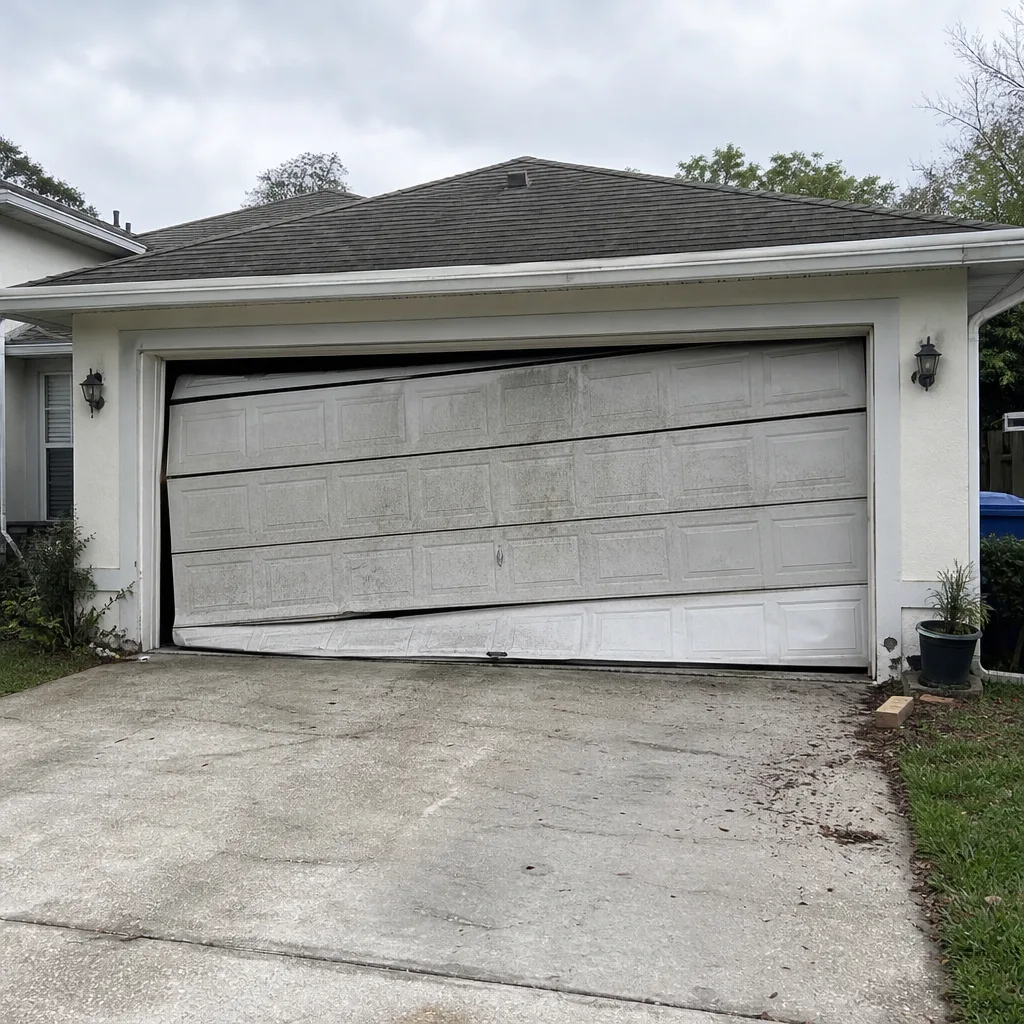 Before
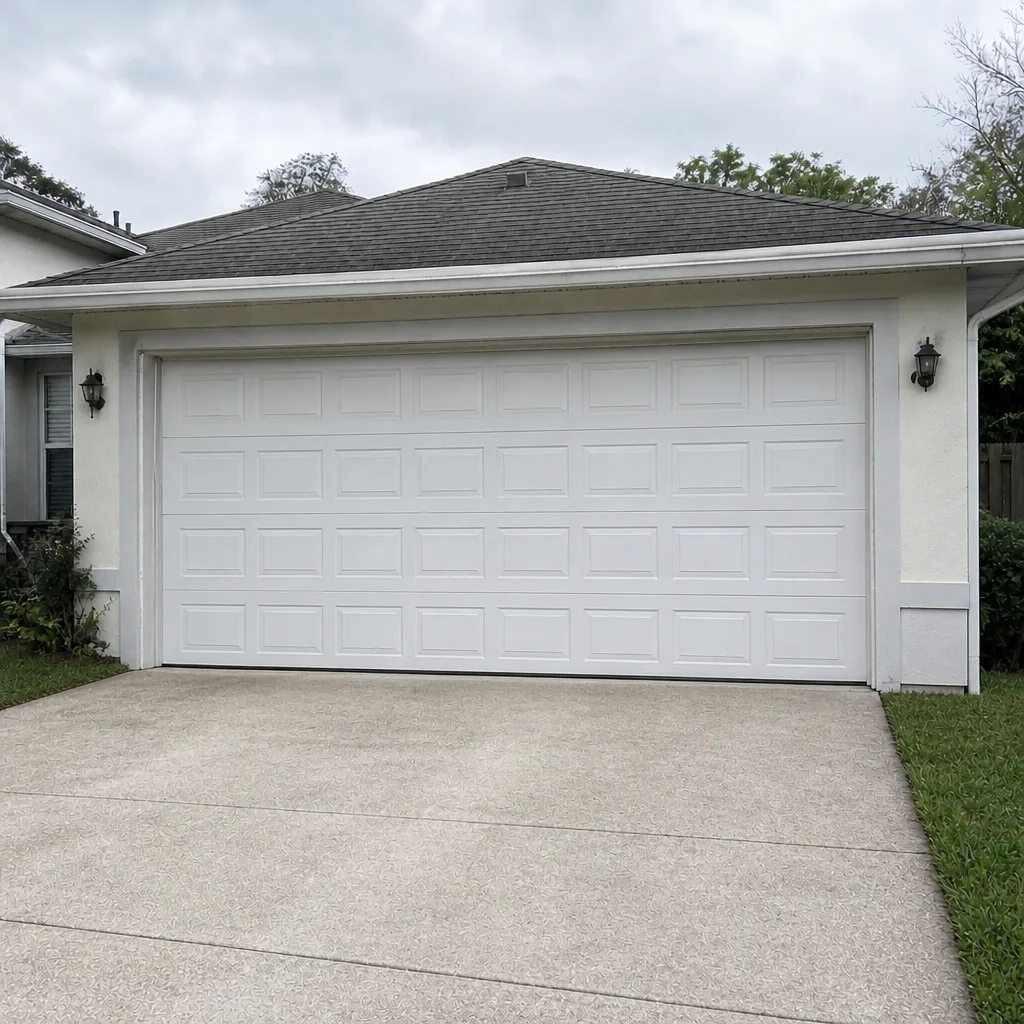 After
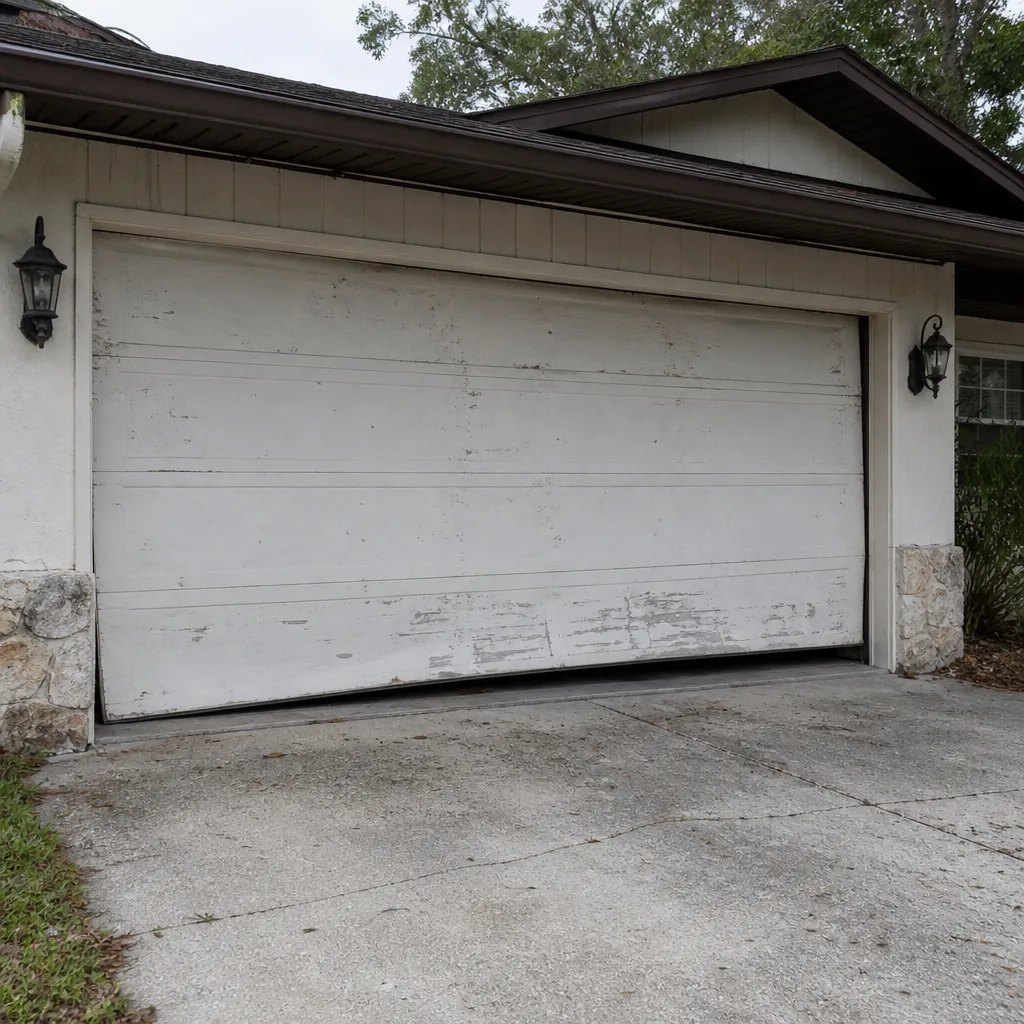 Before
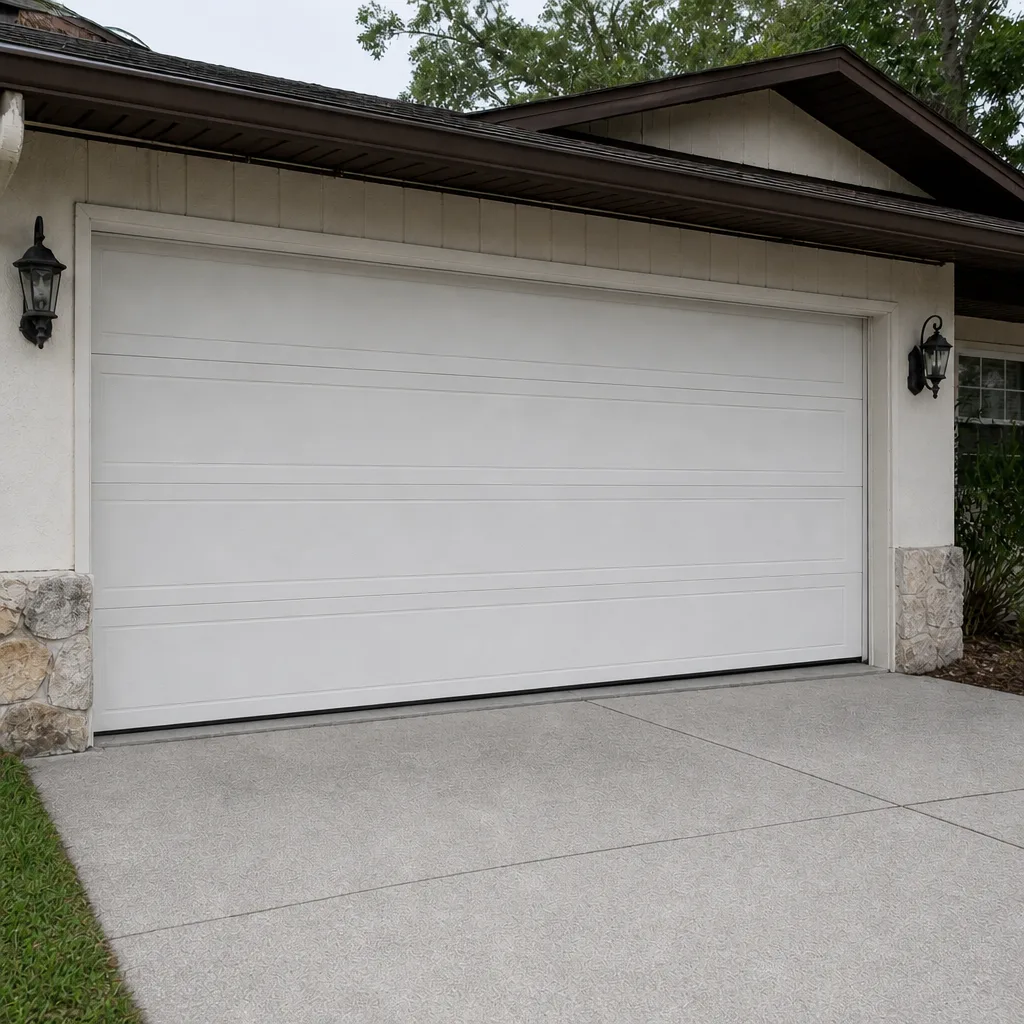 After
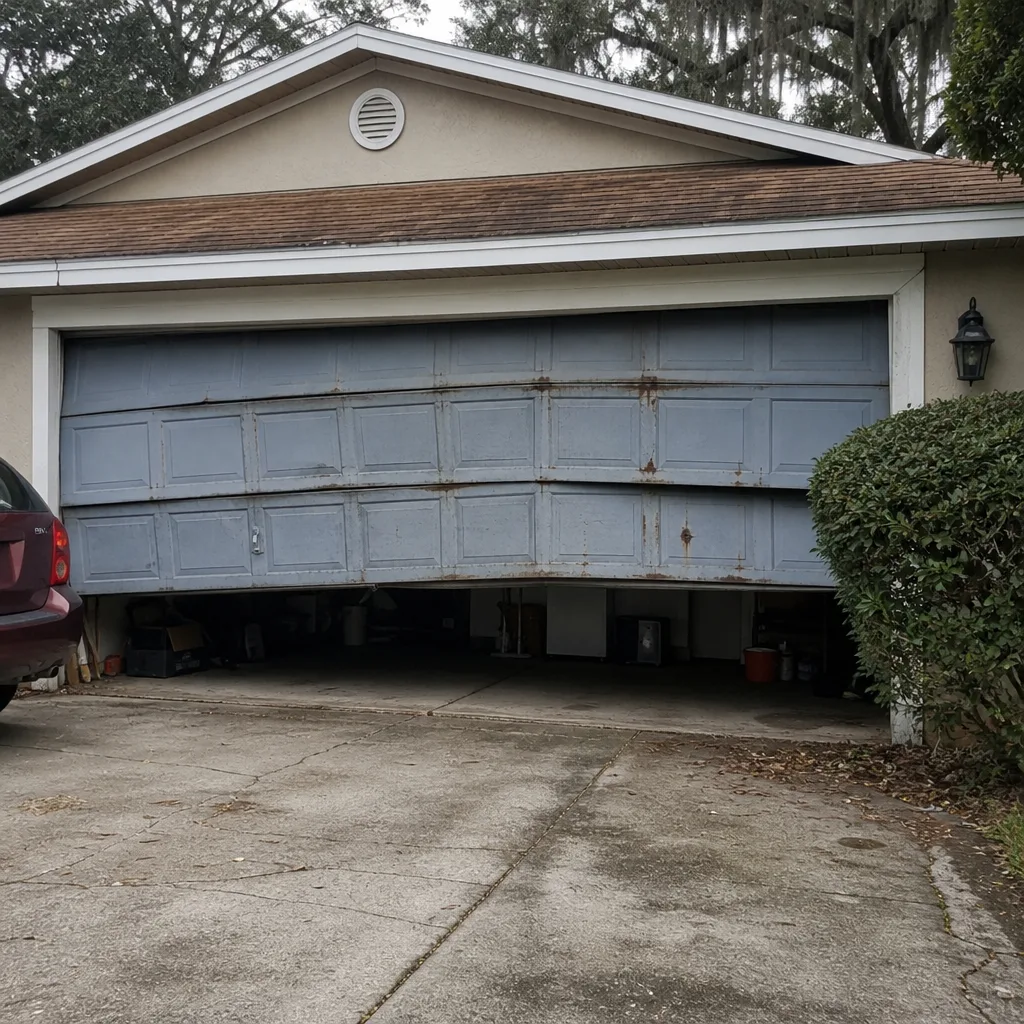 Before
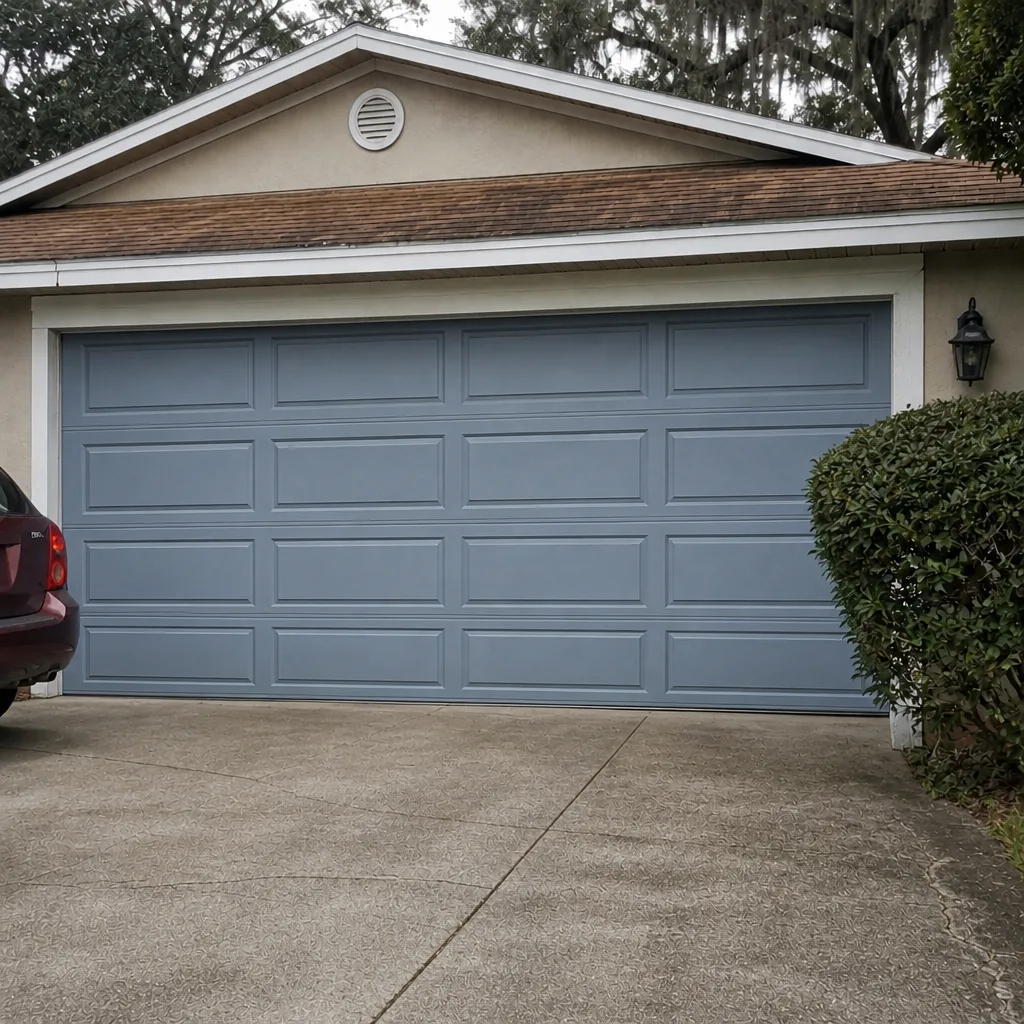 After
Frequently Asked Questions
The required wind-load rating depends on the wind zone your specific address falls in, and Pinellas County enforces it through permitting. The county building department is the authority on which zone applies to your home and what documentation your permit needs. Confirm your zone with them, then shop only rated doors that match it.
If your home sits in a zone that requires a rated door and yours isn’t rated, replacement is usually the priority, even if the door still works. A door that opens fine every day can still fail an inspection or a storm requirement. A proper evaluation will tell you whether your existing door is already rated or not.
Springs are rated by cycles, not by calendar year, so their lifespan depends on how often the door runs. Humidity can affect the surrounding hardware, but cycle count is the real measure. A technician can tell you how close your springs are to the end of their rated life during an inspection.
Keep everyone clear of the door and don’t try to lift or adjust it yourself, since a broken spring leaves the door’s weight unsupported. Call a trained technician. Spring repair takes specialized tools and training, and it’s not a job for a DIY kit.
Repair is usually the smarter call when the structure is sound and the wind rating holds for your zone. Replace when the door isn’t rated for this wind zone, when damage spans multiple sections, or when corrective repairs approach the cost of a new door. A free estimate can lay out both sides clearly.
Yes. A door stuck open or completely off-track is a security and safety concern, and we treat it as an emergency. Call (888) 891-5643. We answer 24/7. Fast dispatch from 7am to 7pm, Sunday through Friday. A call outside dispatch hours is booked into the next opening, Sunday through Friday, 7am to 7pm.
The Bottom Line
A garage door choice in Palm Harbor starts with the wind-load rating for your zone, moves to a material that handles humidity, then to door mechanics and an opener that matches. Repair when the door is structurally sound and rated. Replace when it isn’t rated, when damage spans the whole door, or when repair costs approach replacement. Keep up the small checks so rust and seals don’t become big jobs, and leave springs and cables to a trained technician. Get the first decision right and everything else follows. At Palm Harbor Garage Door Repair Co we work on your brand, whether the door or the opener needs attention, so you don’t have to call a second contractor for the other half of the system. If you’re unsure which way to go, Palm Harbor Garage Door Repair Co can help you weigh repair against replacement, and we’ll connect you with a local pro who’s licensed and insured as their state requires.
Talk to Us About Your Garage Door
Whether your door is failing, your opener is acting up, or you’re weighing a new door for your Palm Harbor home, the next step is a free estimate. Call (888) 891-5643 for a free estimate. We answer 24/7. Fast dispatch from 7am to 7pm, Sunday through Friday. The written estimate sets the price before any work begins, so there are no surprises when the job is done.
Written by the team at Palm Harbor Garage Door Repair Co.