
Last updated November 23, 2026
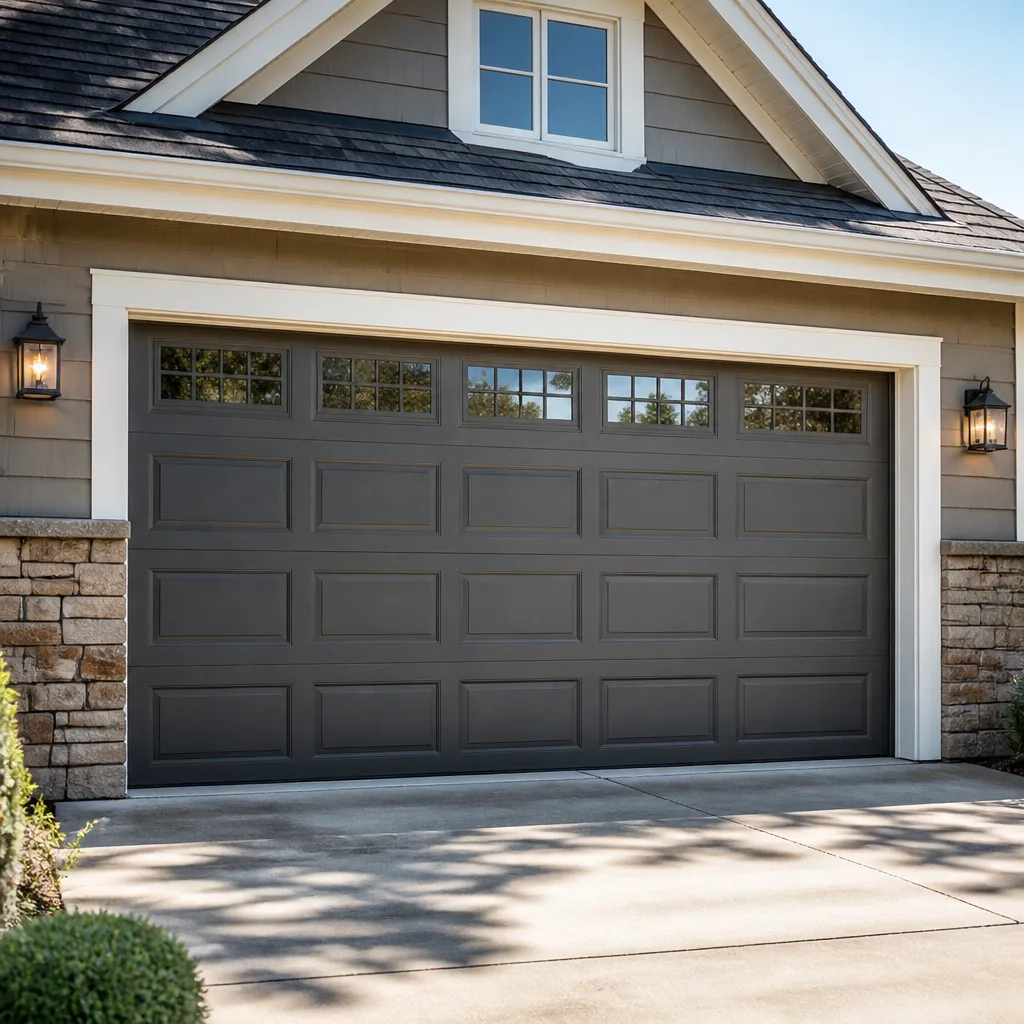 Raised-panel steel
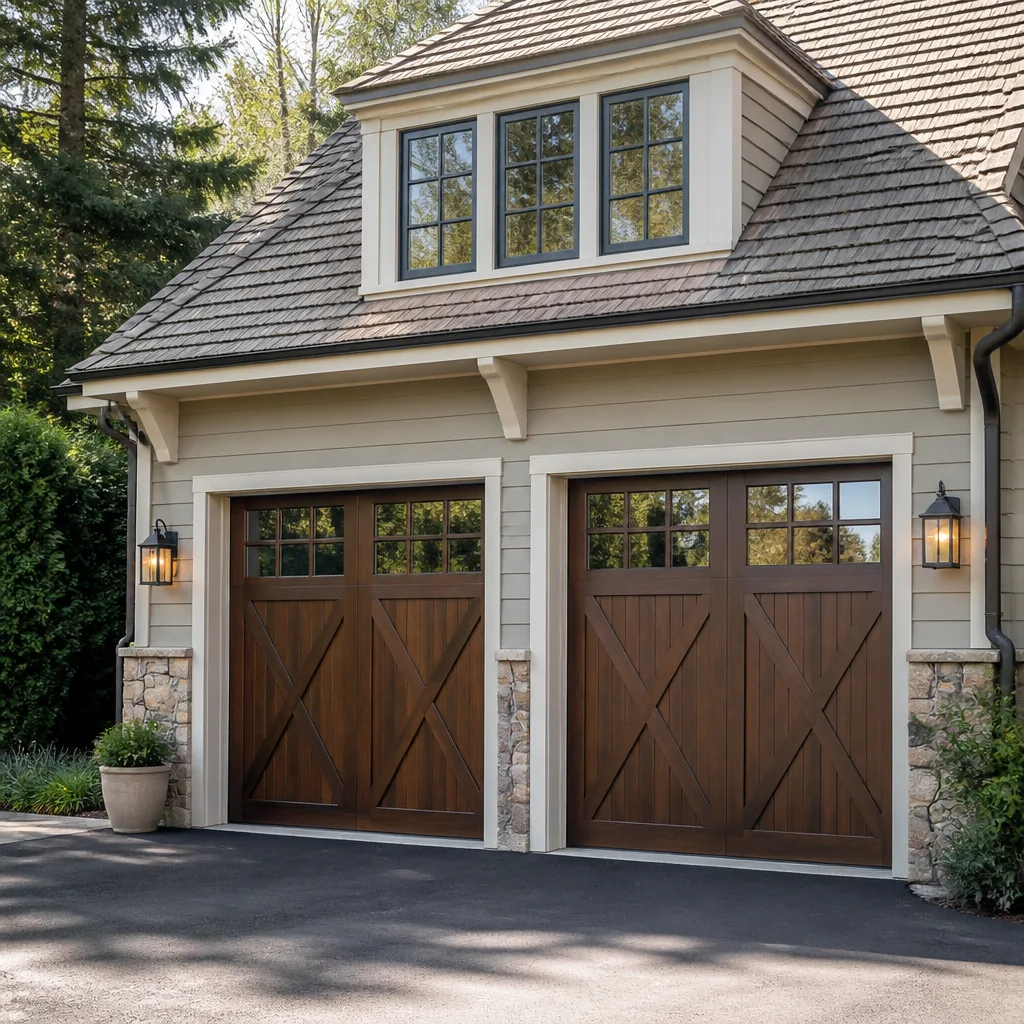 Carriage house
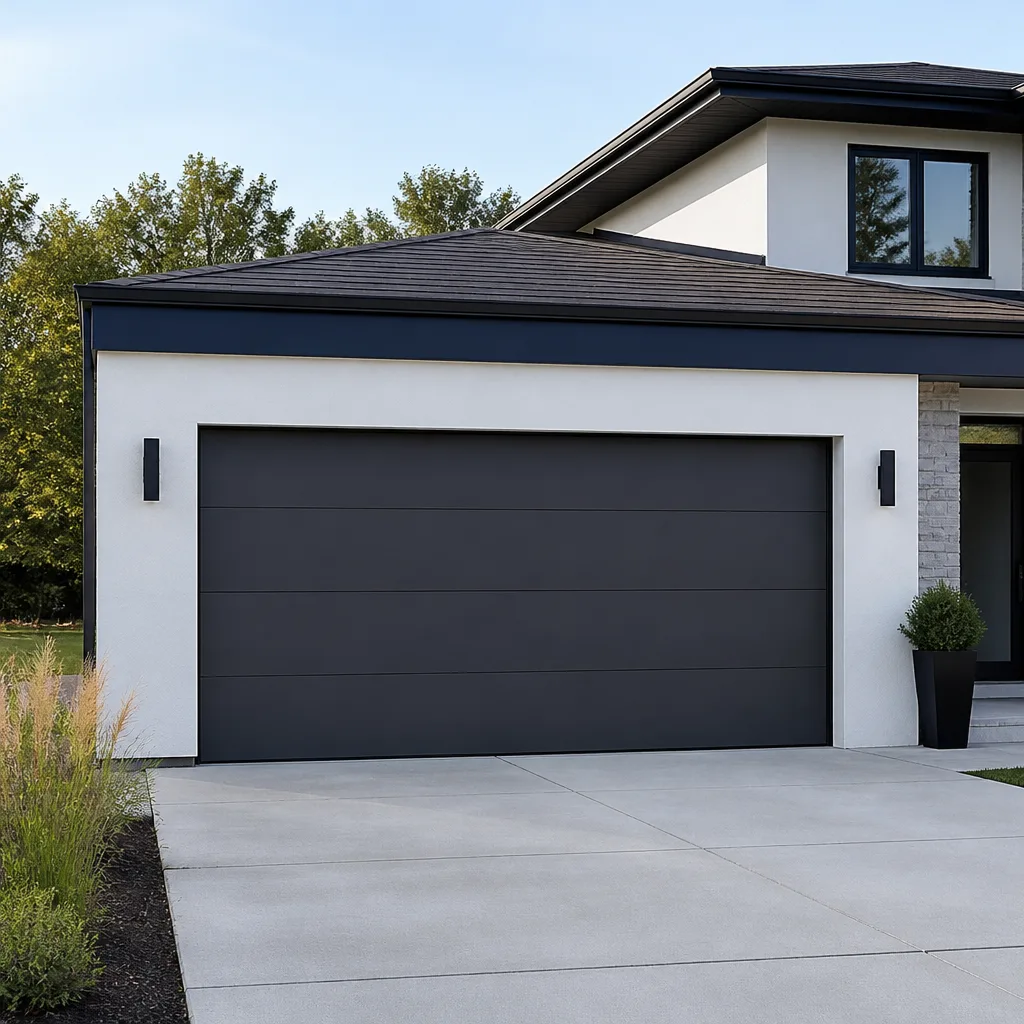 Modern flush
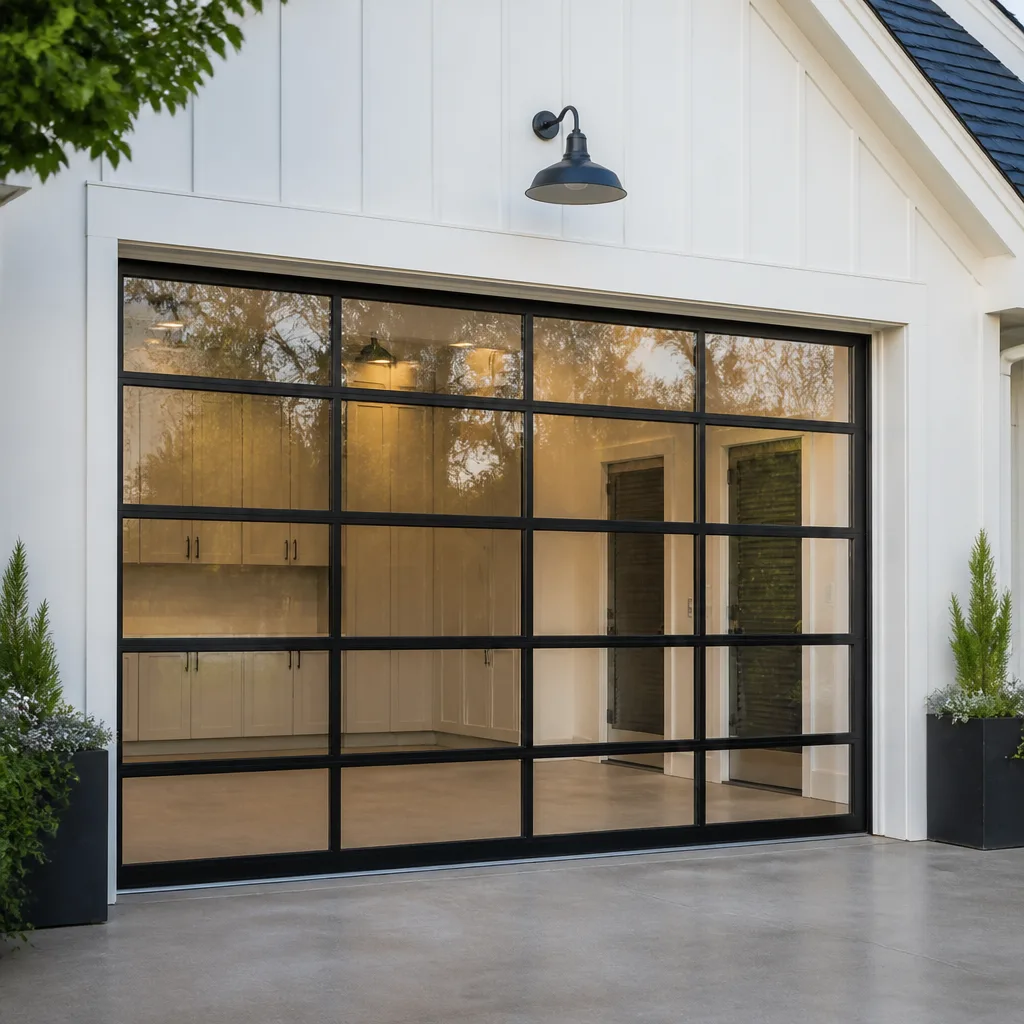 Full-view glass
 LiftMaster openers
 Chamberlain openers
Full 25-point door and opener safety check with every visit - springs, cables, rollers, tracks, and your LiftMaster or Chamberlain opener included
You get a price before we start. It does not change when the pro arrives.
Get your free estimateGarage Door Permits, Codes & Inspections in Palm Harbor, FL: What You Need to Know
Most Palm Harbor homeowners assume a garage door is a repair item, not a permit item. That assumption holds right up until a replacement door gets flagged during a home sale, and suddenly a job everyone treated as routine becomes a paperwork problem at the worst possible moment. Here’s the piece nobody explains clearly: replacing a door and fixing a door are treated very differently under the Florida Building Code, and the line between them matters more than most people realize. This guide walks through when a permit is required in Palm Harbor, what wind-load compliance means in practice, how the inspection process works, and how to check whether your existing door was ever permitted at all.
Quick Answer
In Palm Harbor and the rest of Pinellas County, repairing an existing garage door, opener, or spring generally does not require a permit, but a full door replacement typically does, because a new door is a structural and wind-load change to the building envelope. The exact requirement depends on the scope of the work, and the authority to confirm it is Pinellas County’s building department. Before any replacement is scheduled, ask your contractor who is pulling the permit, and get the answer in writing.
Styles & brands we work with
- Raised-panel steel
- Carriage house
- Modern flush
- Full-view glass
- LiftMaster openers
- Chamberlain openers
Table of Contents
- Repair vs. Replacement: Where the Permit Line Falls in Pinellas County
- What Wind-Load Compliance Actually Means for a Palm Harbor Garage Door
- How to Check Whether Your Existing Garage Door Was Permitted
- What the Inspection Actually Involves
- Contractor vs. Homeowner: Who Pulls the Permit, and Who Is Responsible
- Selling a Palm Harbor Home With an Unpermitted Door
- Wind Zone Context: Why Palm Harbor Doors Get Scrutinized
- How We Handle Permits, Codes, and Inspections
Repair vs. Replacement: Where the Permit Line Falls in Pinellas County
The permit question comes down to one distinction: are you restoring the existing door assembly, or are you changing it? That’s the framework the Florida Building Code uses, and it’s the framework Pinellas County’s building department applies when a homeowner or contractor submits a permit application. In plain terms, a repair puts the door back the way it was; a replacement installs something new, and a new door is a different structural and wind-load condition on the wall opening.
Here’s how that plays out across the jobs we handle in Palm Harbor:
- Spring repair or replacement – no permit. The springs are internal mechanical components of the door assembly, and swapping them doesn’t change the door’s wind rating or its attachment to the structure.
- Opener repair or replacement – no permit. The opener is an appliance mounted to the ceiling, not part of the building envelope. This covers opener work on LiftMaster, Chamberlain, Genie, and the other brands we service.
- Panel replacement on the same door model – usually no permit, but worth confirming with the building department if the panel is being sourced from a different manufacturer or carries a different wind rating than what’s on the assembly label.
- Full door replacement – typically requires a permit. A new door assembly, tracks, and hardware constitute a new component of the building envelope, and the county wants to verify the wind-load rating and the anchorage.
- Converting from a single door to a double door, or changing the opening size – requires a permit and typically structural engineering, since the header and framing change.
- Converting a garage to living space – a separate permit and a much bigger project. That’s a building-envelope and occupancy change, well beyond a door swap.
If there’s any doubt whether a specific job crosses the line, the correct move is to call Pinellas County’s building department directly and describe the scope. They’ll tell you whether the work is permit-exempt or requires an application. In our experience, homeowners who ask this question before work begins never have a problem, and homeowners who find out during a sale always wish they had.
If you’re not sure whether your situation is a repair or a replacement, start with a diagnosis. Our garage door repair team can look at your existing door and tell you which side of the line it falls on before anyone orders a new door.
What Wind-Load Compliance Actually Means for a Palm Harbor Garage Door
Wind-load compliance isn’t a certification that hangs on a wall, and it isn’t a single number. For a residential garage door, it’s a way of describing how much wind pressure the door assembly is designed to resist and how strongly it’s anchored into the surrounding structure. A Palm Harbor door installed to code has three things working together: a door product rated for the surrounding wind zone, an anchorage system that matches the product’s requirements, and a permit and inspection trail showing a professional checked both of them.
The product rating itself is published by the door manufacturer and tested to standards the Florida Building Code recognizes. What that means in practice is that a door sold in Palm Harbor needs documentation showing its design pressure rating for the opening it’s being installed into. A door rated for a smaller opening doesn’t get “made to work” for a bigger one without engineering. And the anchorage – the brackets, the jambs, the fasteners, and the header – has to meet the manufacturer’s installation instructions, which are specific and not open to improvisation.
Here’s what that looks like during a replacement on a Palm Harbor home:
- The contractor measures the rough opening and the existing anchor points, not just the visible door size.
- A door product is selected that carries a design pressure rating that fits the opening and the surrounding wind zone.
- The permit application includes the product’s documentation and the installation method.
- The door is installed to the manufacturer’s instructions, including anchor spacing, fastener type, and reinforcement.
- The county inspector verifies the installation against the permit application.
Where this goes wrong is when a door rated for a modest opening gets installed on a larger one, or when a rated door is hung on brackets that weren’t part of the rated assembly. Both of those installations can be strong enough to look right and weak enough to fail. That’s one of the reasons we verify the door product’s documentation before we install – we work across Raynor, Clopay, Amarr, and the other brands we service, and the anchorage requirements and rating documentation vary by product line.
For homeowners planning a replacement, our garage door installation team can confirm the correct product rating for your specific opening before the order is placed.
How to Check Whether Your Existing Garage Door Was Permitted
If you’ve bought a Palm Harbor home in the last several years, or you inherited a garage door someone else installed, the first practical step is finding out whether a permit was ever pulled. Pinellas County maintains a public searchable record of building permits, and garage door replacement permits are recorded against the property address just like any other structural permit. A fifteen-minute search tells you whether the door in your garage has a paper trail.
Here’s the process we’d walk a homeowner through:
- Find your property’s parcel information through the Pinellas County Property Appraiser’s public records. That gives you the property identification number you’ll be searching against.
- Open the Pinellas County building services permit search and look up the property by parcel number or address.
- Look for any permit issued around the time the current door was installed. If you don’t know when the door went in, check the door’s manufacturer label – it typically carries a production date.
- Look for a permit description that mentions “garage door” or “overhead door” specifically, not just “accessory structure” or another nearby scope.
- If a permit exists, pull its status. “Finaled” or “closed” means the inspection passed. “Open” or “expired” means it never did.
- If no permit exists for the door, that’s your cue to talk to the building department about what documentation would satisfy them before you sell.
What if the door isn’t permitted? That’s not a disaster, but it’s not nothing. The building department may require that the existing door be documented as compliant – sometimes through a retrofit inspection, sometimes through a professional evaluation of the product rating and anchorage. The path forward depends on the individual case and should come from the county, not from a contractor. What we can do is confirm the door product on your home, its rating, and how it’s anchored, so you’re not going into that conversation blind.
What the Inspection Actually Involves
The inspection on a permitted garage door replacement is a check of the installed product against the approved permit, not a general safety inspection of the door. The county inspector is looking at the things the permit application said would be installed and the way the manufacturer required them to be installed. If those match, the inspection is typically short. If they don’t, the inspector issues corrections and the contractor schedules a re-inspection.
What the inspector checks, generally:
- The door product installed matches the product documentation submitted with the permit, by make and model.
- The design pressure rating on the installed door’s label meets the rating listed on the permit.
- The anchorage matches the manufacturer’s installation instructions, including bracket placement and fastener type.
- The track and header attachments are present and secure, in the positions the installation drawings call for.
- The finished opening matches the dimensions listed on the permit, so the door hasn’t been upsized or downsized on the fly.
What the inspector does not do: test the opener, adjust the springs, verify the door balance, or check whether the safety reversal is properly set. Those are the installer’s responsibility and, separately, a homeowner’s regular check. The inspection and the commissioning are two different things, and a passed inspection doesn’t mean the door was fully dialed in.
Timewise, in our experience a residential garage door replacement inspection in Pinellas County is usually scheduled within a small number of business days of the installation being reported complete, though that timing is the county’s to control, not ours. The door can typically be used once it’s installed and balanced, so the wait for the inspection itself isn’t a wait to use your garage. What the homeowner should check is that the contractor returns to close the permit after the final inspection, so the record reflects a finished, approved job.
Separately from the permit inspection, we recommend homeowners test door balance, safety reversal, and photo-eye function every few months. Those are the checks that keep the door safe between service visits. If anything feels off, a garage door opener repair visit can sort out the electronics while a spring check handles the mechanics.
Contractor vs. Homeowner: Who Pulls the Permit, and Who Is Responsible
Either a licensed contractor or the homeowner can technically pull a permit in Florida, but the two paths carry very different consequences if something goes wrong. When a contractor pulls the permit, the contractor is the responsible party in the county’s eyes for that scope of work – they’ve signed off on the installation meeting the code, they’re on the record, and their license is the one that stands behind the job. When a homeowner pulls the permit themselves, the homeowner becomes the responsible party for the work, even though a contractor physically performs the install.
That second scenario is more common than it should be, and it almost always happens because nobody explained the tradeoff. A homeowner pulling their own permit and then having a contractor do the work means:
- The homeowner is listed as the contractor of record on the permit.
- The homeowner is responsible for making sure the installation matches the permit.
- If the inspection fails, the correction and re-inspection are the homeowner’s to coordinate.
- If a problem later surfaces with the installation, the permit record doesn’t point to a licensed contractor the homeowner can go back to.
We don’t think a homeowner should be put in that position by default. If we’re doing a door replacement in Palm Harbor, the permit should be pulled by us, in our name, with our license on the record – that’s the accountability the permit system is designed to create. And it’s a simple test of any contractor: ask up front who’s pulling the permit, and if the answer is “you should pull it,” ask why. A contractor who is comfortable being the responsible party will say so without hedging.
The flipside matters too: the homeowner is still the one who lives with the door. A permit and a passed inspection don’t remove the day-to-day checks a homeowner should do, and they don’t replace a proper maintenance visit. The permit is the record; the door is still the door.
Selling a Palm Harbor Home With an Unpermitted Door
Unpermitted improvements of any kind become a problem at the moment of a sale, not before. During a Florida home sale, a buyer’s inspector and the title search both have a chance to catch structural improvements that don’t have a permit record, and a garage door replacement without one shows up in the same bucket as an unpermitted addition or a rebuilt deck. The sale can proceed, but it usually does with conditions: a repair credit, a delayed closing, or a buyer who walks and finds a cleaner file elsewhere.
The good news is that the fix usually isn’t a full reinstallation. In many cases the way to resolve an unpermitted door is to have the door documented as it exists – the product, its rating, its anchorage – in a form the building department will accept as the basis for a retrofit permit or a compliance letter. That’s a conversation with the county, but it goes better with documentation in hand, so the first step is confirming exactly what’s on your door today.
Here’s the sequence we recommend to any Palm Harbor homeowner planning to sell in the next year or two:
- Search the Pinellas County permit records for your address before your buyer’s inspector does.
- If a door replacement permit exists and is finaled, save a copy. That’s your clean file.
- If no permit exists, or the permit is open or expired, call the building department and describe the door as installed. Ask what they require to close it out.
- Have a technician confirm the door product, its rating label, and the anchorage, so you can describe the door accurately to the county.
- If the county requires a professional evaluation, get that done and keep the documentation with your closing paperwork.
This isn’t a story about a specific sale or a specific customer – it’s the same sequence we’d suggest to any Palm Harbor homeowner, because it’s the one that avoids the surprise. The worst place to discover an unpermitted door is on a disclosure form the week before closing.
Wind Zone Context: Why Palm Harbor Doors Get Scrutinized
Garage doors get more attention in Pinellas County than they might in other parts of the country, and it’s not arbitrary. The garage door is the largest opening in a residential building envelope, and it’s also the one most likely to fail during a high-wind event if the door product, the anchorage, or the installation isn’t up to the rated condition. That’s the entire reason the county asks for a permit and an inspection on a replacement rather than accepting a contractor’s word.
Palm Harbor sits within Pinellas County’s coastal wind zone framework, which is why the door product rating requirement shows up on the permit application in the first place. It’s also why the door manufacturers publish design pressure ratings per model and per opening size – the rating isn’t a marketing claim, it’s a tested number that the permit and inspection process is designed to match to your specific opening. A door rated for a smaller opening doesn’t become compliant by being installed carefully; it’s the wrong product for the opening, and the permit process is what catches that.
None of this means every Palm Harbor homeowner needs to worry about their existing door. Most doors in the area are installed to code, and most of the ones that aren’t were installed that way by someone who didn’t tell the homeowner a permit was required. If you’re unsure about your door, a quick look at the product label and the anchorage tells you a lot. And if you’re replacing, the door product selection is the single biggest decision, which is why we start there. LiftMaster and Raynor products both show up frequently in this market, but the correct choice for your opening isn’t a brand question – it’s a rating question.
How We Handle Permits, Codes, and Inspections
When a Palm Harbor homeowner calls us about a garage door replacement, the permit conversation starts before anyone orders a product. We confirm the scope, decide together whether the work is a repair or a replacement, select a door rated for the opening, submit the permit application in our name, install to the manufacturer’s instructions, and carry the permit through final inspection. That’s the sequence, and we don’t skip steps because a homeowner didn’t know to ask.
What we bring to it specifically:
- Factory-trained service across eight major garage door and opener brands – LiftMaster, Chamberlain, Genie, Clopay, Amarr, Wayne Dalton, Craftsman, and Raynor – so the door product selection and the opener compatibility are handled in one place.
- We pull permits in our name and carry the record through inspection, so the accountability sits with us rather than the homeowner.
- We handle the door and the opener together, which is a real advantage when a replacement door needs a new opener to match its weight and balance.
- For repair work – springs, openers, hardware – we confirm in writing that no permit is required for the specific scope before we start.
- Emergency service for doors that are stuck open, stuck closed, or off-track, because a door that won’t close is a security problem, not a next-week appointment.
Our technicians have up to 10 years of experience, and the work is quoted and agreed before anything starts – the written estimate sets the price. If you’d like a straight answer on whether your Palm Harbor door project needs a permit, get in touch with Palm Harbor Garage Door Repair Co and we’ll tell you plainly. If it’s a repair, you’ll hear that. If it’s a replacement, you’ll hear that too, along with what the process involves.
Common Mistakes to Avoid
- Assuming a new door is “just a repair.” Once the door assembly and its anchor points are replaced, it’s a replacement under the code, and a permit is typically required. The same-size door you bought as an upgrade still triggers a permit if it’s a different product.
- Letting the contractor talk you into pulling the permit yourself. A contractor who wants the homeowner on the permit record is shifting the accountability in a direction that doesn’t help you. Ask up front and expect a straight answer.
- Not checking your permit history before listing the house. A buyer’s inspector will search, so it’s better if you’ve already searched and have the file ready. Fixing a permit record before listing is always easier than fixing it mid-contract.
- Installing a door without confirming its design pressure rating against your opening.
- Treating a finaled inspection as a finished job. A passed inspection confirms the permit was met. It doesn’t confirm the door balance, safety reversal, or photo-eye function – those still need a proper check.
- Waiting until a door is off-track to call. A door that’s visibly off-track, or one that’s been run with a broken spring, tends to need more replacement work than a door that got service when the symptom first appeared.
- Assuming unpermitted work means the door has to come out. In many cases the county accepts documentation of the existing installation as a basis for a retrofit permit. The path forward is almost never as bad as the homeowner fears, but the earlier it starts, the calmer it is.
See the difference
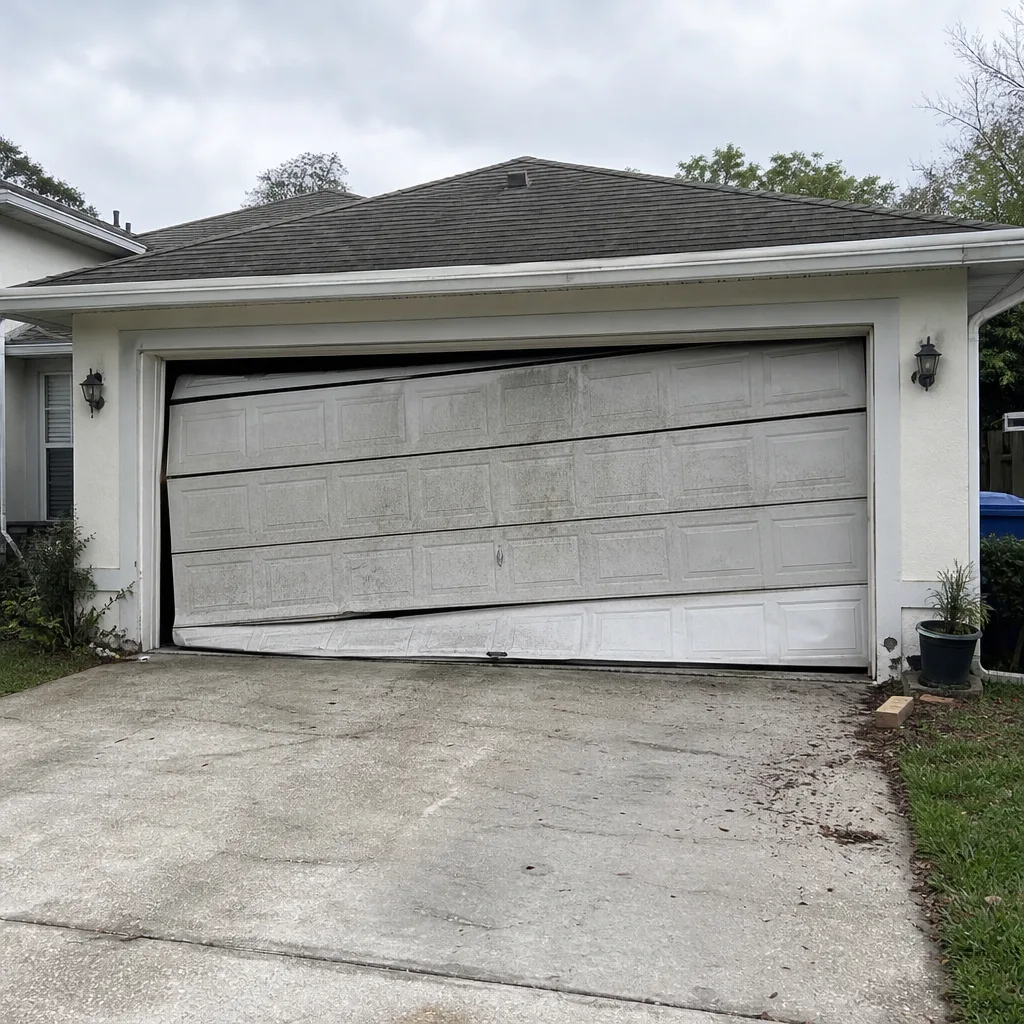 Before
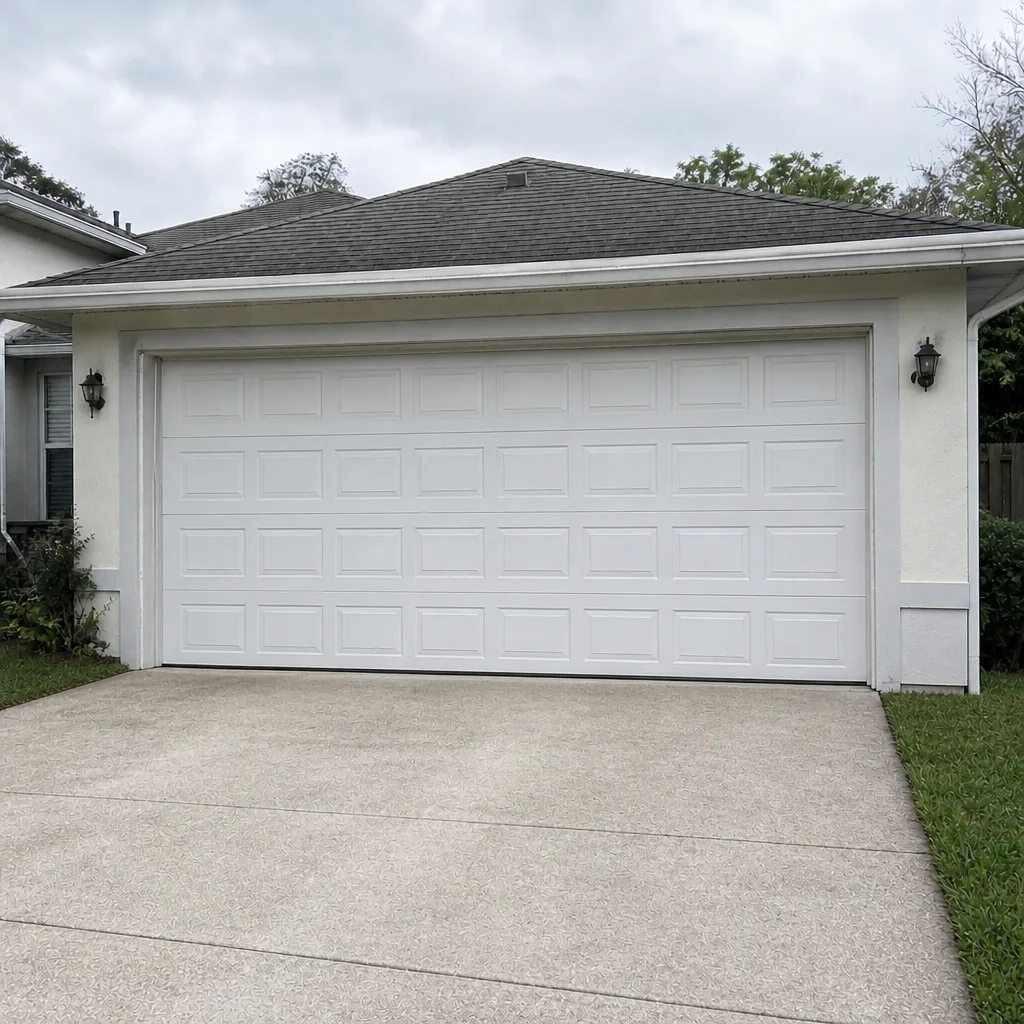 After
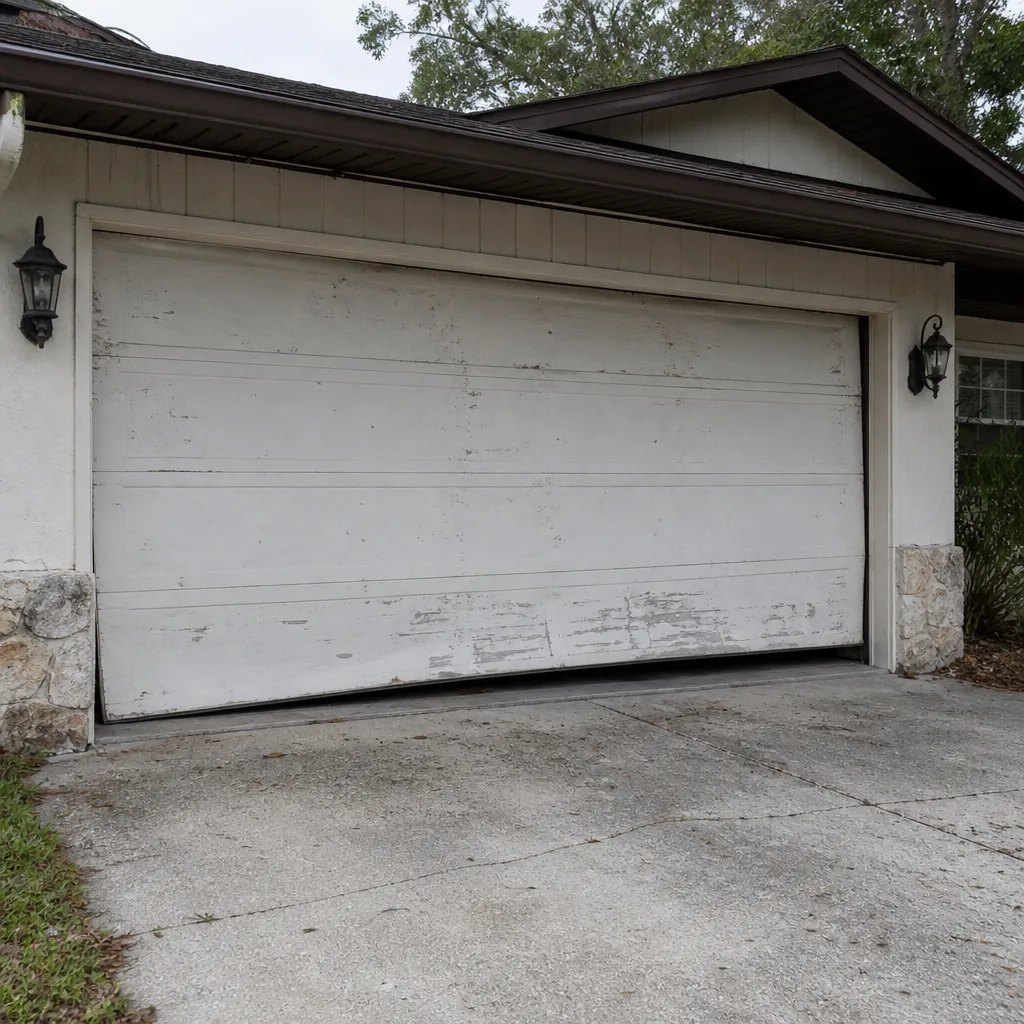 Before
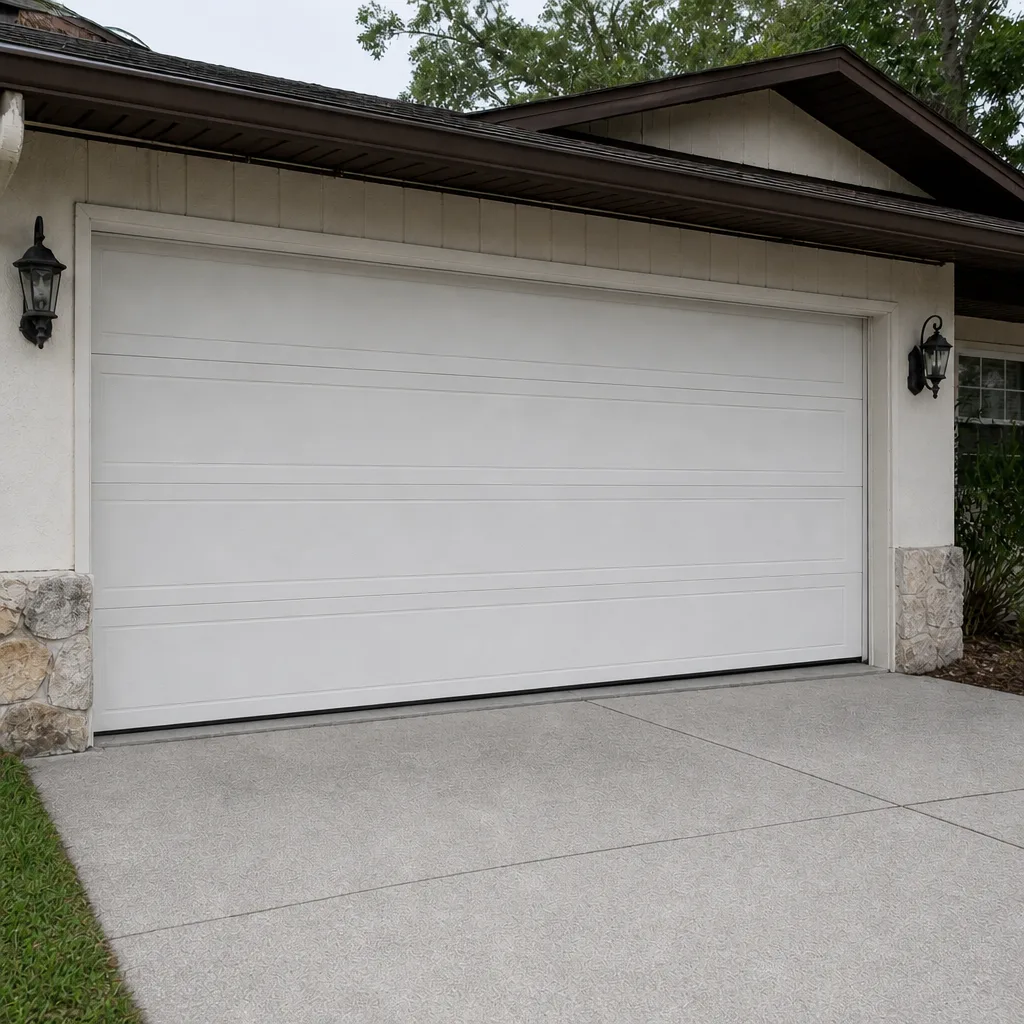 After
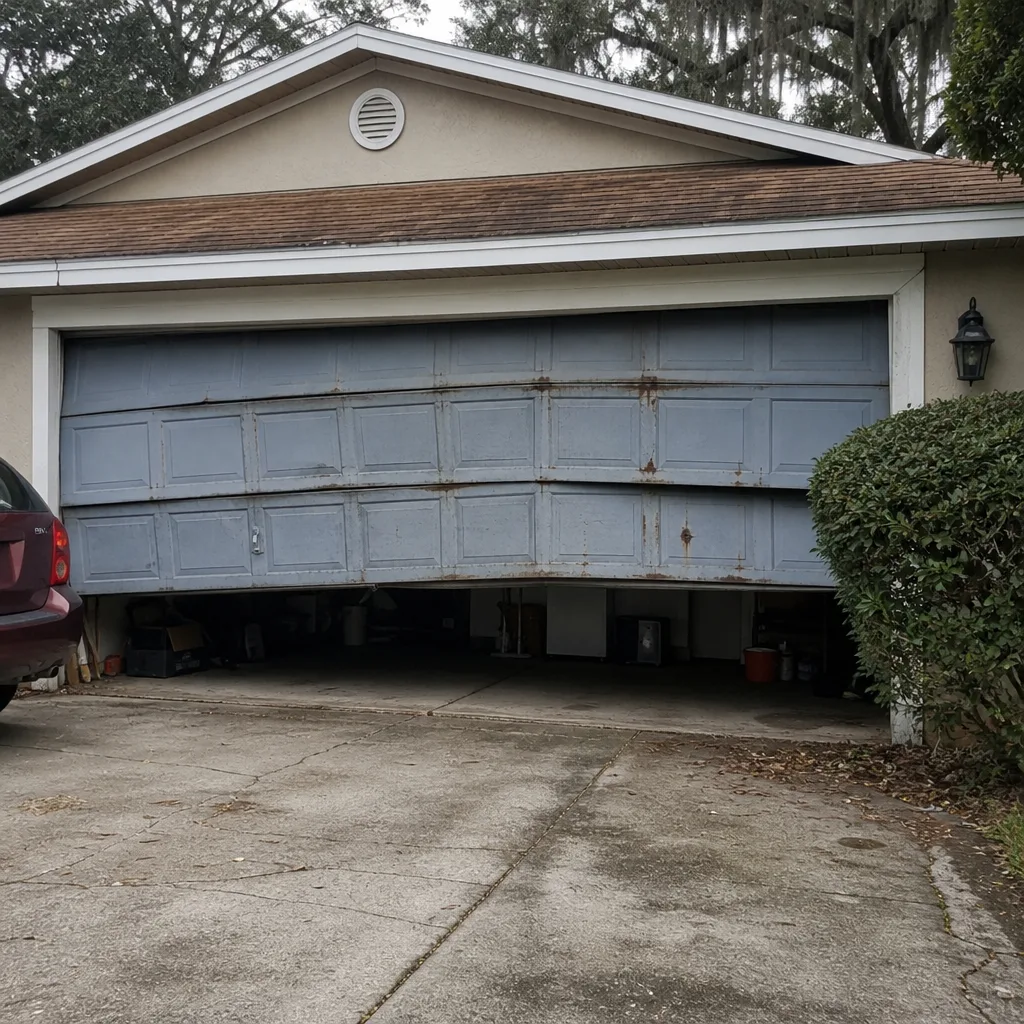 Before
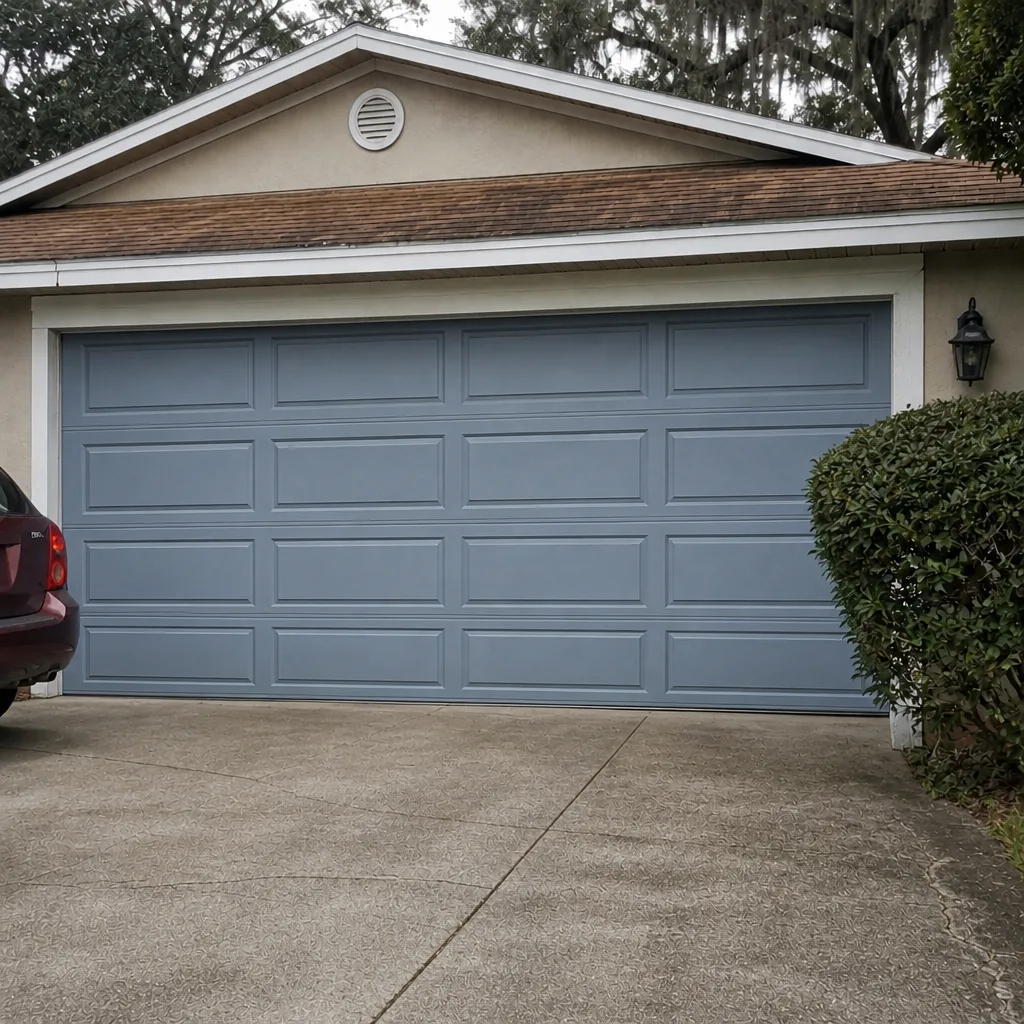 After
When to Call a Professional
Some garage door work is well within reach of a careful homeowner – testing the safety reversal, checking the photo-eyes, watching for the early signs of a failing opener. But the jobs that touch the springs, the anchorage, the electrical, or the building envelope need a trained technician for a straightforward reason: they’re the jobs where a mistake hurts the door, the house, or the person doing the work. A torsion spring is under enough tension to seriously injure someone if it’s handled without the right tools, and a door that’s installed with the wrong hardware on a Pinellas County opening isn’t compliant even if it looks right.
Call a professional when:
- A spring has broken, or the door feels unusually heavy to lift.
- The door is off its track, bent, or stuck open or closed.
- You’re planning any replacement, whether same-size or changing the opening.
- You’ve found an unpermitted door and need documentation for the county or a sale.
- You don’t know whether the job you’re considering needs a permit.
Palm Harbor Garage Door Repair Co offers free estimates in Palm Harbor. Call (888) 891-5643. We answer 24/7. Fast dispatch from 7am to 7pm, Sunday through Friday. The quote is free and the written estimate sets the price before any work starts.
Frequently Asked Questions
In most cases, yes. A full garage door replacement in Palm Harbor typically requires a permit from Pinellas County because a new door assembly and its anchorage are a change to the building envelope, and the county needs to verify the wind-load rating. Repairs to springs, openers, and hardware generally do not require a permit. Because the answer depends on scope, the building department is the authority to confirm your specific job before work begins. Call (888) 891-5643 for a free estimate and we’ll help you sort out which category your project falls into.
No. Spring replacement and garage door opener replacement are treated as repairs to the existing assembly, not as changes to the building envelope, so they don’t typically require a permit in Palm Harbor. The permit question comes up on replacement doors, opening-size changes, and structural modifications. If you’re unsure about a specific repair, ask us when you call and we’ll tell you plainly. Call (888) 891-5643 for a free estimate.
The contractor should pull it. When the contractor is the permit holder, the contractor is the responsible party on the record for the scope of work, and their license stands behind the installation. If the homeowner pulls the permit and a contractor performs the work, the homeowner becomes responsible for the correction and re-inspection if anything fails. Before you hire, ask who’s pulling the permit and expect a straight answer. Call (888) 891-5643 for a free estimate.
Turnaround is the county’s to control, and it varies with their current workload and the completeness of the application. In our experience, a straightforward residential garage door replacement inspection is usually scheduled within a small number of business days of the installation being reported complete, but we never promise a timeline the county owns. What we can control is submitting a complete application with the door product documentation, which is what avoids corrections and re-inspections. Call (888) 891-5643 for a free estimate.
Unpermitted doors often become a problem during a home sale, when a buyer’s inspector or a title search turns up a structural improvement with no permit record. The fix is usually documentation, not reinstallation: the county may accept a retrofit permit or a professional evaluation of the existing door’s rating and anchorage. The first step is a search of Pinellas County’s permit records, then a conversation with the building department about what they require. Call (888) 891-5643 for a free estimate and we’ll help you identify what’s on your door.
It means the door product is rated for the wind pressure of your specific opening, and it’s anchored into the structure in the way the manufacturer’s installation instructions require. The rating is published by the door manufacturer and tested to a recognized standard; the anchorage is documented in the installation instructions. Both halves have to match for the assembly to be compliant, and the permit and inspection process is what verifies that. Call (888) 891-5643 for a free estimate if you want your door checked.
The Bottom Line
The permit question on a Palm Harbor garage door comes down to one distinction: repairs to an existing assembly generally don’t need a permit, and replacements of the door assembly generally do. Wind-load compliance is really a product-rating question plus an anchorage question, and both are the county’s reason for requiring a permit in the first place. Check your existing door’s permit history before you need to, know who’s pulling the permit on any new work, and treat the inspection as one step in a proper installation rather than the whole thing. If you’d rather not sort through it alone, call us – the estimate is free, and we’ll tell you plainly whether your project needs a permit. Call (888) 891-5643. We answer 24/7. Fast dispatch from 7am to 7pm, Sunday through Friday.
Written by the team at Palm Harbor Garage Door Repair Co.