
Last updated November 23, 2026
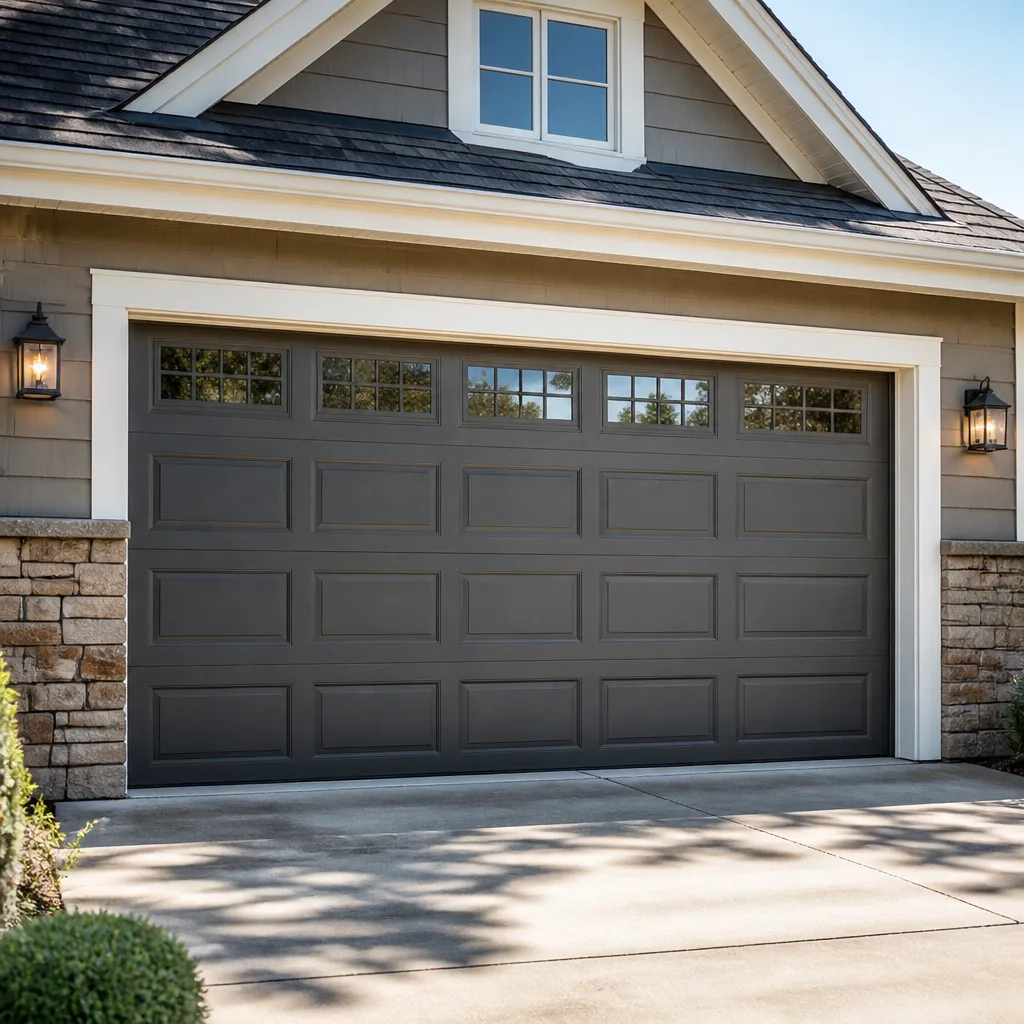 Raised-panel steel
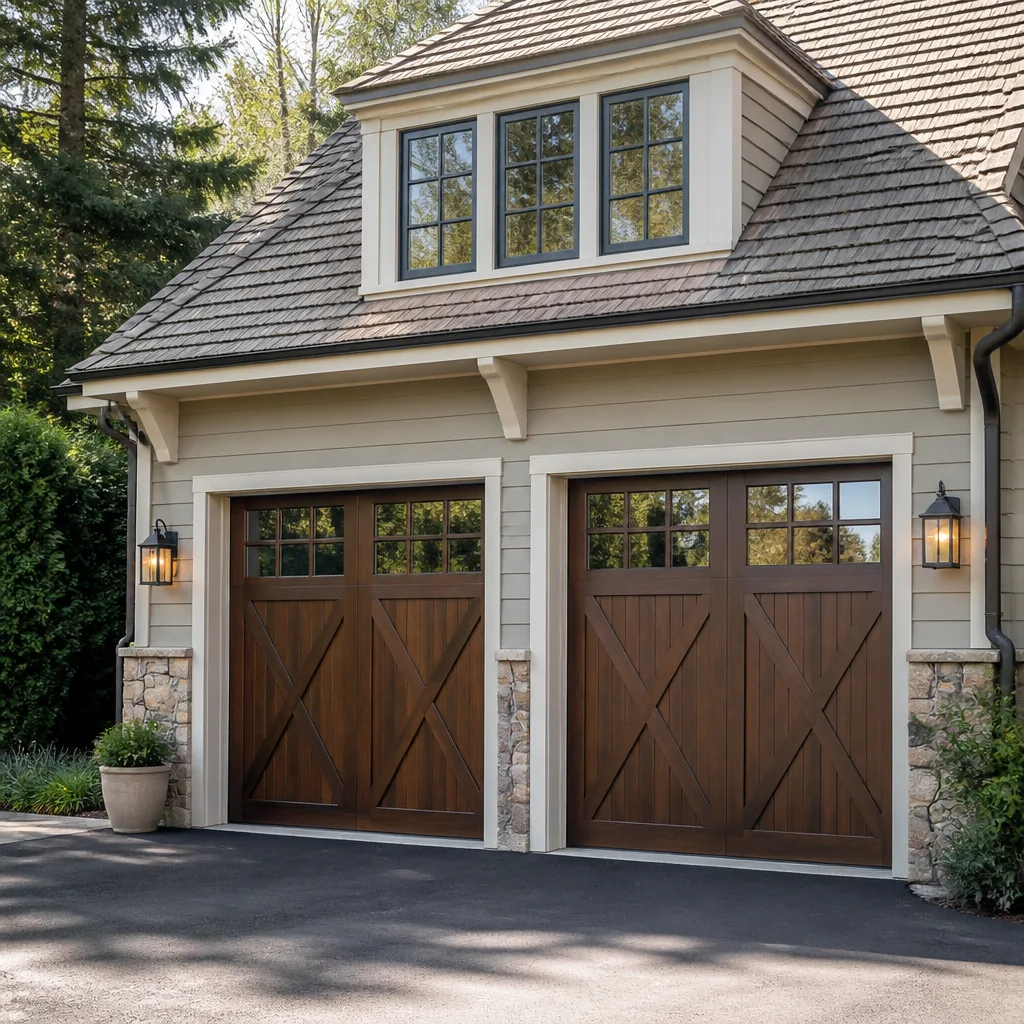 Carriage house
 Modern flush
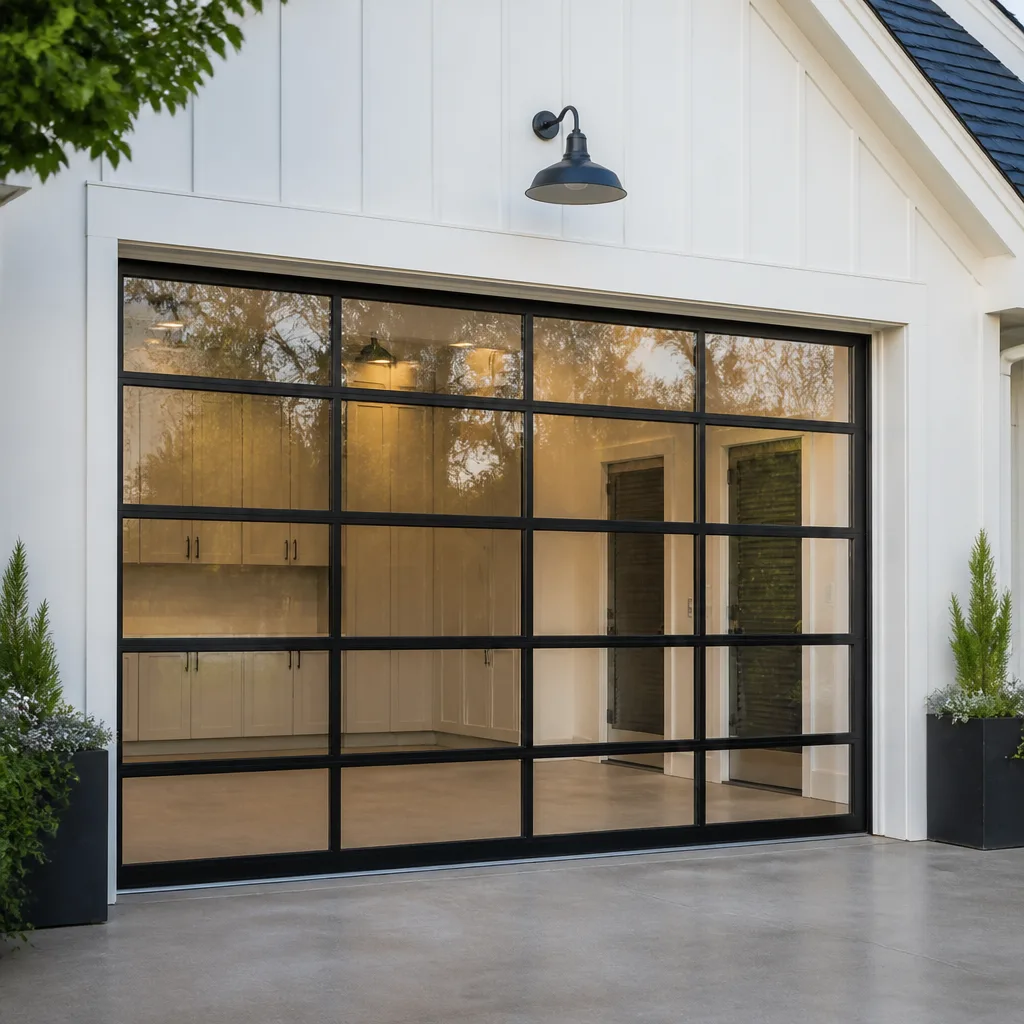 Full-view glass
 LiftMaster openers
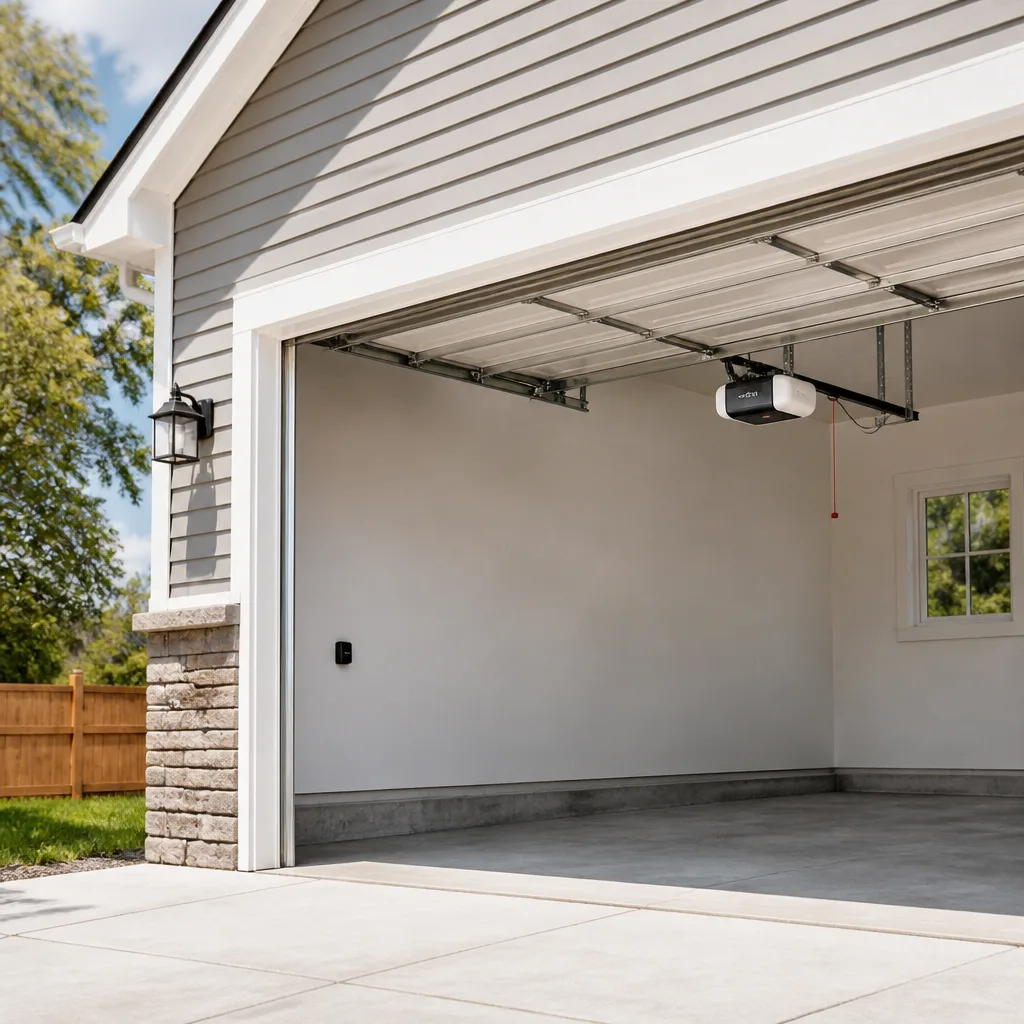 Chamberlain openers
Full 25-point door and opener safety check with every visit - springs, cables, rollers, tracks, and your LiftMaster or Chamberlain opener included
You get a price before we start. It does not change when the pro arrives.
Get your free estimateDIY vs Professional Garage Door: The Palm Harbor Homeowner’s Decision Guide
Most garage door advice splits the world into “you can handle it” and “call a pro,” as if the line were about how handy you are. It isn’t. The real dividing line is injury risk and code consequence. A bottom seal you can swap in twenty minutes with no more than a scraped knuckle. A torsion spring holds enough stored force that a slip of a winding bar can send you to the emergency room. This guide sorts the common garage door jobs into three honest buckets: safe to DIY, DIY with real caveats, and professional only, with the reasoning behind every call. By the end you’ll know exactly which jobs in Palm Harbor you can take on and which ones you shouldn’t touch.
Quick Answer
Torsion and extension spring work, cable replacement, and any job that means disconnecting the door from its lifting mechanism are professional-only because a mistake can injure you or drop a several-hundred-pound door. Bottom seals, rollers on extension spring doors, and programming a smart opener are genuinely DIY-friendly. Everything in between depends on your comfort with tools and the age of the door. When in doubt, a free estimate costs you nothing and tells you what you’re really facing in Palm Harbor.
Styles & brands we work with
- Raised-panel steel
- Carriage house
- Modern flush
- Full-view glass
- LiftMaster openers
- Chamberlain openers
Table of Contents
- Why This Isn’t Really About Skill Level
- Safe to DIY: The Jobs You Can Genuinely Handle
- DIY With Caveats: Proceed Carefully
- Professional Only: The Jobs That Can Hurt You
- The Florida Permit Angle Most Homeowners Miss
- The Cost of Getting It Wrong
- How to Be an Informed Customer Even When You Hire Out
- When to Call a Professional
Why This Isn’t Really About Skill Level
A garage door is the largest moving object in most homes, and it runs on stored energy. That’s the part people underestimate. A torsion spring that’s been wound to balance the door is holding back force that wants to unwind, and it doesn’t care whether you’re a weekend tinkerer or a licensed contractor. The difference between a safe job and a dangerous one usually comes down to whether you have to release that stored energy to do the work.
So a genuinely skilled homeowner can still be the wrong person for a spring job, while someone with almost no experience can safely replace a weather seal. Skill matters, but it’s secondary to what the task physically requires. In Palm Harbor, where garages often serve as the main entry to the house, a door that’s down means the household is disrupted, and that pressure pushes people to attempt repairs they shouldn’t. We’d rather you understand the risk before you’re standing on a ladder with a winding bar.
There’s a second layer here too, and it’s the one that surprises people: paperwork. Some garage door work in Florida interacts with permits or with the condition of your home at sale or insurance review. That’s not a reason to avoid DIY on the safe jobs, but it is a reason to know which jobs create a record. This guide treats both layers, the physical and the administrative, because the complete answer needs both. Our team at Palm Harbor Garage Door Repair Co fields questions about this constantly, and the honest answers aren’t always “call us.”
Safe to DIY: The Jobs You Can Genuinely Handle
These three tasks are the ones we routinely tell homeowners they can handle themselves with a little information. None of them require releasing stored spring tension, and none of them put you under a door that could fall.
- Bottom seal replacement. The rubber or vinyl seal along the bottom edge wears out, cracks, and lets in rain and pests. You slide the old one out of its track and slide a new one in. The main thing is measuring the width and matching the seal type to your door’s channel. No tools beyond a utility knife and maybe a little lubricant.
- Roller replacement on extension spring doors. On doors balanced by extension springs (the springs run along the horizontal tracks), you can often replace a worn roller without disturbing the spring. The door stays connected, you work one hinge at a time, and you swap the roller in its bracket. Never do this on a torsion spring door without guidance, because the tension behaves differently.
- Smart opener programming. Pairing a new remote, connecting a Wi-Fi opener to your phone, adjusting travel limits and force settings from the opener’s menu. This is menu work, not mechanical work. Chamberlain and Genie openers both walk you through it, and the manual is your friend.
Beyond those, a few minor jobs are also reasonable: lubricating hinges and rollers, tightening loose bracket bolts, and cleaning the photo-eye lenses so the safety reverse works. If your door uses a Clopay or Amarr panel and you’re replacing a single damaged section yourself, that can work too, provided it doesn’t require loosening the cables.
The rule of thumb: if the job doesn’t involve a spring, a cable, or disconnecting the door from its lifting mechanism, it’s probably in reach. If it does, it belongs in the next section or the one after.
DIY With Caveats: Proceed Carefully
These jobs sit in the gray zone. A careful homeowner with the right tools and a healthy respect for the door can do some of them. Others should really be left alone once you understand what’s involved.
- Replacing a single hinge or bracket. Fine if the door stays fully connected and under no unusual tension. The caveat: brackets near the spring and cable anchor points are load-bearing and shouldn’t be touched without knowing the system.
- Adjusting opener force and travel limits. Doable, and worth doing. The caveat is that an over-tight force setting defeats the safety reverse, which is the mechanism that stops the door on contact. Test it after every change.
- Replacing a photo-eye sensor. Usually a wire-and-mount swap. The caveat: the alignment has to be right or the door won’t close, and miswiring can trip the opener’s logic board.
- Repainting or refinishing a steel door. Safe and worthwhile in Florida’s humidity, but prep matters, and painting over a dented panel hides damage you may want to look at first.
- Replacing a torsion spring yourself. We put this here only to say plainly: don’t. It’s the job that belongs in the professional-only section no matter how confident you feel. We’ve seen too many homeowners treat it as a YouTube project.
The pattern is that the gray-zone jobs are fine as long as the door’s core lifting system stays intact and untensioned. The moment a job requires you to loosen a cable, remove a spring, or take the door off its tracks, it’s no longer a caveat, it’s a hazard. Palm Harbor homes with older doors often have a mix of worn rollers and tired springs, which makes it tempting to fix everything at once. Fix the easy parts, and let a professional handle the rest in the same visit.
Professional Only: The Jobs That Can Hurt You
These are the jobs where the downside isn’t a bad result, it’s an injury. A fully wound torsion spring stores a large amount of energy, and if the winding bar slips, that energy releases instantly. It’s not a question of being careful. Even experienced technicians treat spring work as the most dangerous part of the trade, which is why we do it as a core service rather than a referral.
The professional-only list:
- Torsion spring replacement. Requires controlled winding and unwinding with the right bars. A slip is a serious injury. This is the one job we’d tell any homeowner to hand off without hesitation.
- Extension spring replacement. Slightly less violent than torsion, but the spring is still under high tension and the cable can snap back. Same conclusion.
- Cable replacement. Cables are under extreme tension and can whip when they fail or are released wrong. A snapped cable can cut through a hand.
- Track realignment and off-track doors. A door that’s jumped its track is unstable and can fall. Getting one back on safely means understanding the whole lifting system.
- Panel replacement on a torsion door. Replacing a full-height panel means the door comes off its balance, and you have to handle the spring tension to do it safely.
- Opener replacement. The electrical work plus the door-weight math makes this one for a technician, especially if you’re switching brands or going from a chain drive to a belt.
If your door is stuck open or completely off its tracks, that’s an emergency, and we treat it like one. We answer 24/7. Fast dispatch from 7am to 7pm, Sunday through Friday.
The Florida Permit Angle Most Homeowners Miss
Here’s the part that has nothing to do with tools. When you hire a professional for certain garage door work, the job is typically done to code and, where the local building department requires it, permitted. When you do it yourself without checking, you can create an unpermitted condition that shows up later, at sale, at inspection, or when your insurer asks questions about a claim.
We don’t publish a list of which jobs need a permit, because the rules are set by the local building department and they can shift. The right move is to call Palm Harbor’s building department and ask before you start a structural job: replacing a door, changing the opener, or altering the tracks or spring system. A two-minute phone call takes the guesswork out. For a seal or a roller, the answer is almost always no permit and no reason to call.
Why this matters at sale: a home inspector walking a Palm Harbor garage will note an opener that’s mounted wrong or a door that doesn’t reverse on contact. Those notes become negotiation items. The DIY cost savings on a spring or opener job can get eaten by a repair billed at closing, and that’s before insurance ever enters the picture. This is one of the reasons our garage door installation work is done to the building department’s requirements, not to whatever seems fast.
The bigger point isn’t that DIY is wrong. It’s that the paperwork layer rewards knowing which jobs create a record. Do the safe jobs yourself, and when a job might need a permit, ask first.
The Cost of Getting It Wrong
The usual DIY pitch is that a professional job costs more than doing it yourself. That’s true only when the DIY job succeeds. When it fails, you’re not just out the parts, you’re paying to repair or replace what the failed attempt damaged, and occasionally paying for medical care on top of it. Here’s the honest comparison, job by job.
- Bottom seal. DIY failure costs you a ten-dollar seal and an hour. Professional cost is a small line item. DIY wins here comfortably.
- Roller replacement on extension springs. DIY usually succeeds. A failed attempt can bend a hinge or strip a bracket, adding a modest repair. Close to even.
- Torsion spring. This is where the math flips hard. A failed DIY attempt can twist the center bearing plate, warp the shaft, and in the worst case injure you. A repair that starts as a spring swap can turn into a shaft, bearing, and door rebalance job. The professional estimate for the same work is a fraction of that worst case, and it comes with the job done and tested.
- Cable replacement. A DIY attempt that goes wrong can snap the cable, damage a drum, or bend the door. A professional does the whole set, checks the springs, and tests the door.
- Opener replacement. A DIY install with the wrong force setting can burn out the opener motor or, worse, defeat the safety reverse. You end up buying the opener twice.
The pattern here isn’t that every DIY job is a trap. It’s that the dangerous jobs have a failure cost that dwarfs the labor you’d save. When we quote a spring repair, the price is agreed in writing before any work starts, so you can compare it directly against the worst case of doing it wrong. That’s the comparison that matters, not the cheapest possible path.
How to Be an Informed Customer Even When You Hire Out
Even when you hand off a job, you should know what’s happening in your garage. Our technicians have up to 10 years of experience, and part of doing that work well is explaining what we’re doing and why. Here’s what to watch for on any professional service call in Palm Harbor, whether it’s us or anyone else.
- Ask what the diagnosis covers. A good technician checks the door, the springs, the cables, the rollers, and the opener, not just the part you called about. One call, one technician, one fix is the goal. If the diagnosis is thin, ask why.
- Watch the safety reverse test. The technician should test that the door reverses on contact before calling the job done. Ask for it explicitly if it doesn’t happen.
- Confirm the brand coverage matters. If your opener is a Chamberlain or a Genie, the technician should be familiar with it, not learning on your time. Our team is factory-trained on LiftMaster, Chamberlain, Genie, Clopay, Amarr, Wayne Dalton, Craftsman, and Raynor, so your equipment is covered.
- Ask for the written estimate before work starts. The price should be clear and agreed before a tool comes out. If a number changes once the door is open, ask what changed and why.
- Check the door balance. With the opener disengaged, a properly balanced door should stay put halfway up. If it drops, the springs are wrong or the door was never rebalanced after the repair.
- Ask about the opener after a door repair. A new door or rebalanced spring changes the load the opener sees. The technician should adjust the opener’s limits to match. Skipping that step shortens the opener’s life.
None of this is meant to be adversarial. It’s simply the checklist that catches corners being cut, and a good technician will welcome the questions. For more detail on how we handle the diagnosis itself, our garage door repair page walks through the steps.
Common Mistakes to Avoid
- Treating a torsion spring like a YouTube project. It’s the single most dangerous job in the garage. The stored force doesn’t care about your confidence.
- Replacing a spring but not the cables or rollers. Springs, cables, and rollers wear together. A new spring on tired cables buys you a short reprieve and another call.
- Skipping the safety reverse test after an opener adjustment. A door that doesn’t reverse can trap a pet or a child. Test it every time you change a setting.
- Assuming a permit isn’t needed. Call Palm Harbor’s building department before a door, opener, or track job. It’s a two-minute call that protects you at sale.
- Letting the opener carry a door the springs should balance. If the door is heavy, the opener works harder and fails sooner. Balance first, opener second.
- Buying a new door when a repair would do. We don’t push replacement. A worn roller, hinge, or spring is a fix, not a new door. But a warped, rotting, or repeatedly failing door may genuinely be a replacement case.
- Calling two specialists for the door and the opener. One company, one visit, one diagnosis is cheaper and catches problems that get missed when the door tech and the opener tech each see half the system.
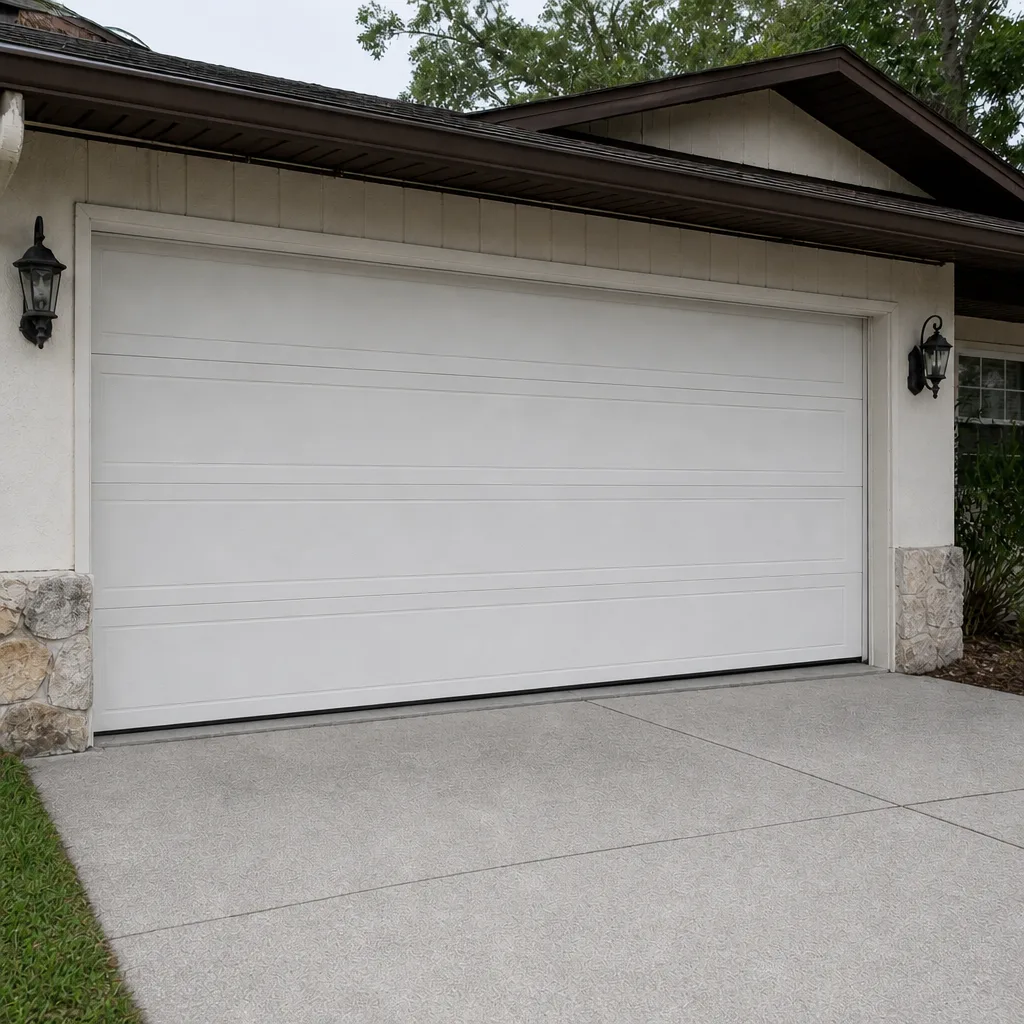
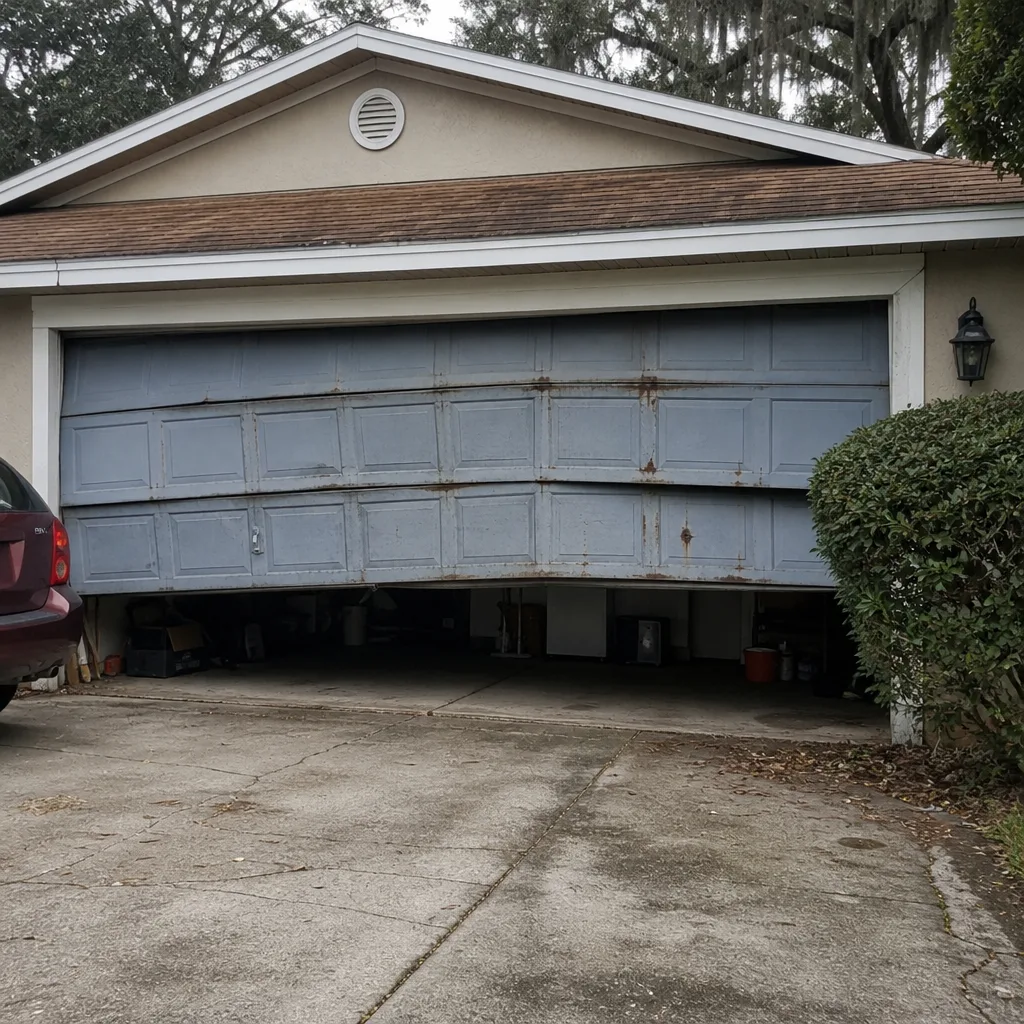
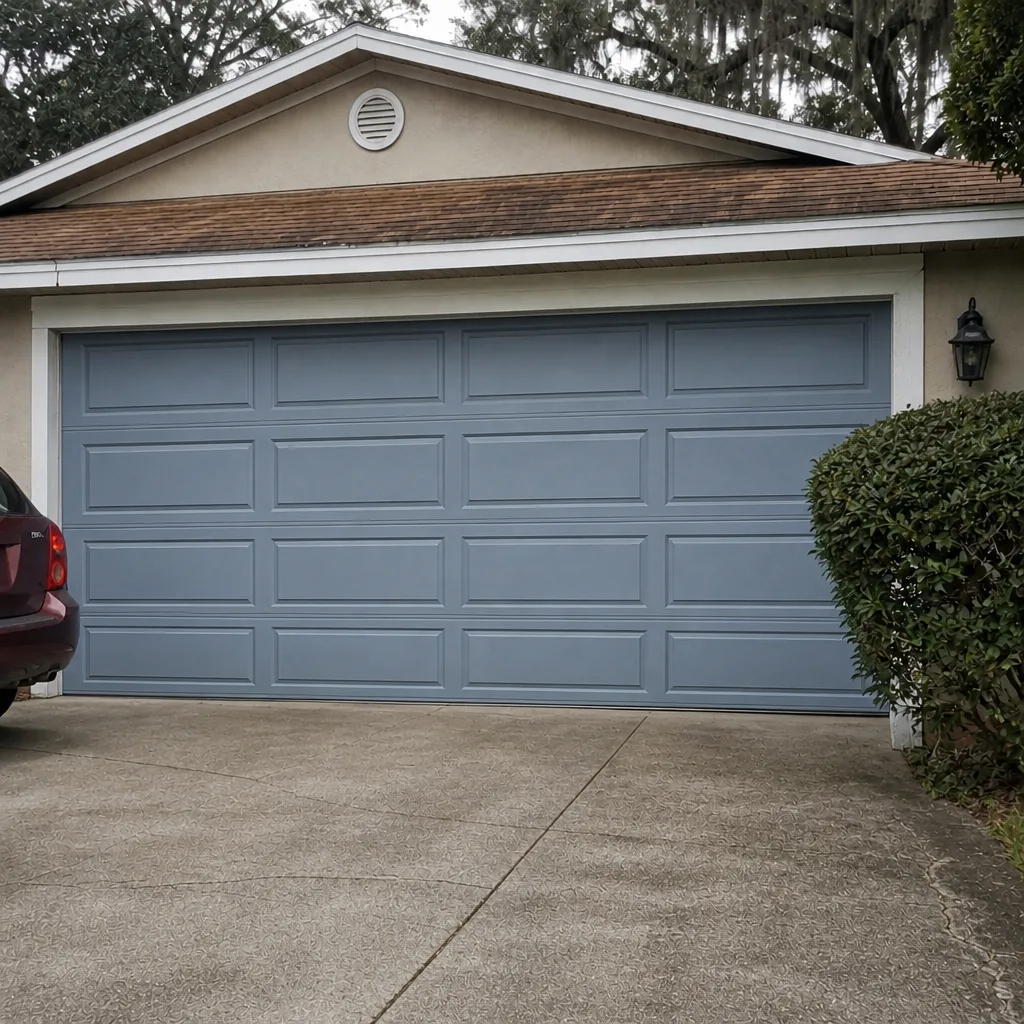
See the difference
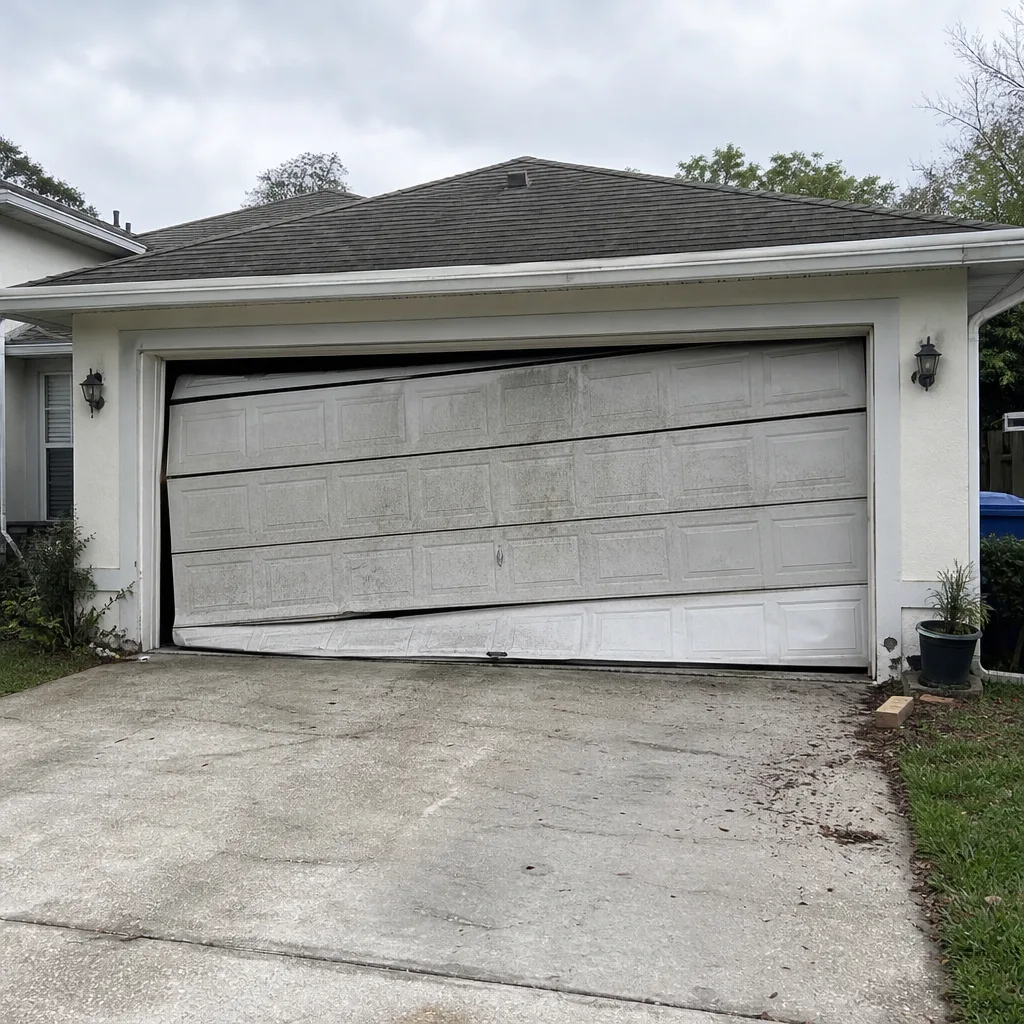 Before
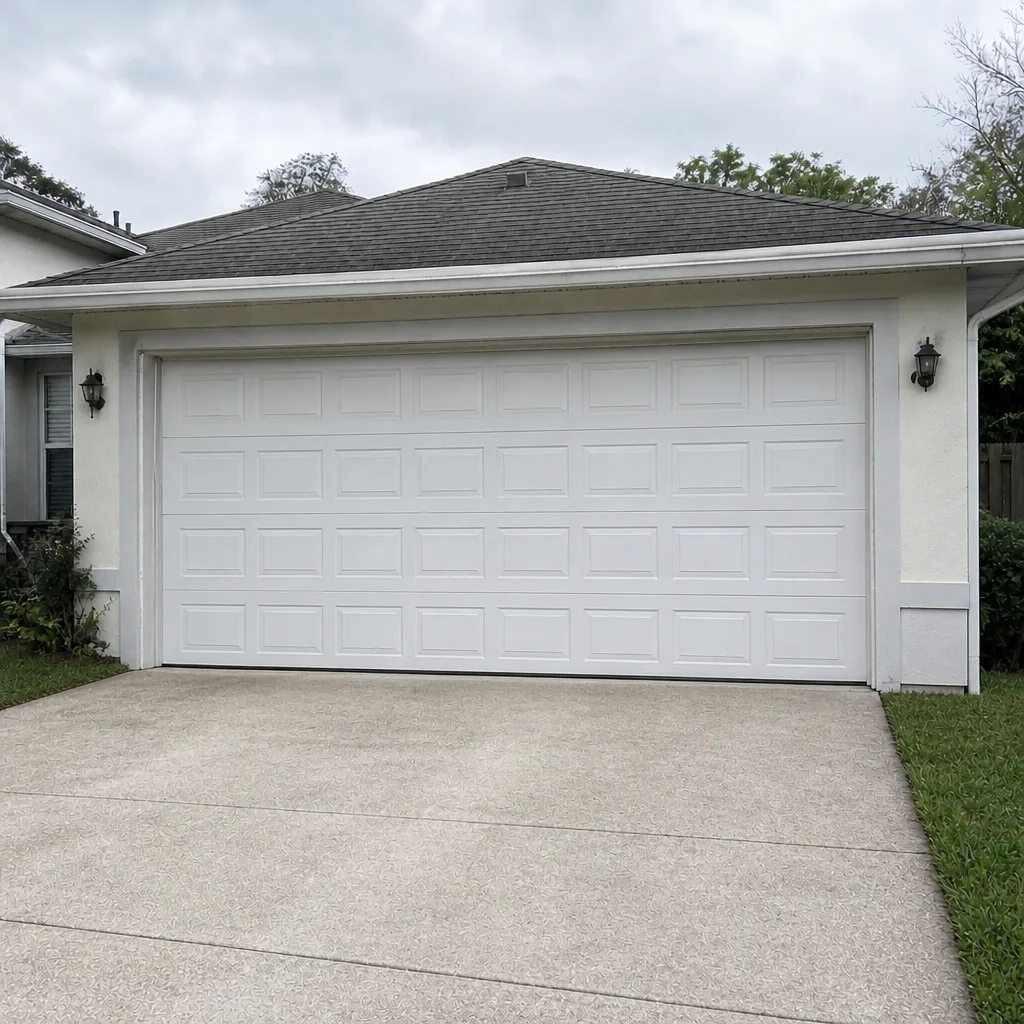 After
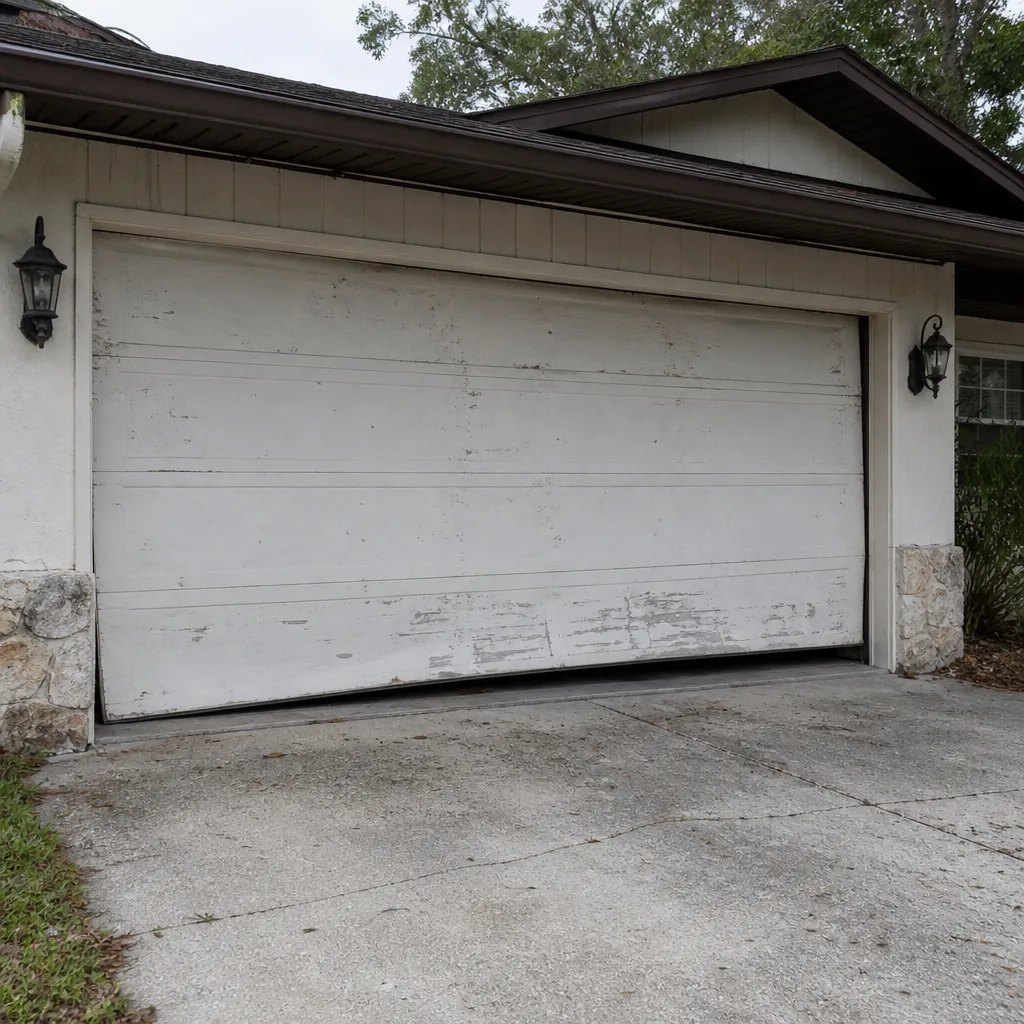 Before
 After
 Before
 After
When to Call a Professional
Call a professional when the job involves a spring, a cable, or an off-track door. Call when the opener dies and you’re not certain the door’s balance is right. Call when the door is stuck open and your home is exposed, or when the door is on the ground and won’t lift. Call when your insurer or a buyer’s inspector has flagged the door. And call when you’ve done a safe DIY job and something still doesn’t feel right; a free estimate tells you what’s actually wrong before it gets worse. Palm Harbor Garage Door Repair Co offers free estimates in Palm Harbor, and the price is quoted and agreed before any work starts. Call (888) 891-5643. We answer 24/7. Fast dispatch from 7am to 7pm, Sunday through Friday.
Frequently Asked Questions
No, and this is the one job we’d tell any homeowner to leave alone. A wound torsion spring stores enough force that a slipped winding bar can cause a serious injury, and that risk has nothing to do with how careful you are. Call (888) 891-5643 for a free estimate instead; the price is set in writing before work starts.
Bottom seal replacement, roller replacement on extension spring doors, and smart opener programming are the three we’d point a homeowner to with confidence. Minor jobs like lubricating hinges, tightening bracket bolts, and cleaning the photo-eye lenses are also reasonable. Anything involving a spring, a cable, or disconnecting the door from its lifting mechanism is not. Call (888) 891-5643 if you’re unsure which category your job falls into.
That depends on the local building department’s current requirements, so call them and ask before you start. The rules are set locally and can change, and an unpermitted condition can complicate a sale or an insurance review later. For work we do, our technicians handle the job to the department’s requirements. Call (888) 891-5643 with questions about your specific door.
No, the price is quoted and agreed before any work starts. If something changes once the door is open, the technician should stop and explain what changed before touching anything. That’s the standard you should hold every garage door company in Palm Harbor to. Call (888) 891-5643 for a free estimate.
Often, yes. Same-day service is available for repair work, and because we handle doors and openers together, one technician can diagnose and fix the whole system in a single visit. We answer 24/7. Fast dispatch from 7am to 7pm, Sunday through Friday. Call (888) 891-5643.
The local professionals we connect you with are licensed and insured as their state requires, and our technicians have up to 10 years of experience. We’re factory-trained on eight major brands, including Chamberlain, Genie, Clopay, and Amarr, so your door and opener are covered. Call (888) 891-5643 for a free estimate.
The Bottom Line
The DIY vs professional question comes down to two filters: injury risk and code consequence. Bottom seals, extension spring rollers, and smart opener programming are yours to handle. Springs, cables, and anything that takes the door off its balance are not, because the failure cost is a medical bill or a much larger repair. Between those, check with Palm Harbor’s building department before any job that creates a record. When you hire, watch for the safety reverse test, the written estimate, and the door balance check. Do the safe jobs, hand off the dangerous ones, and you’ll keep your Palm Harbor garage running without an emergency room visit. If you’d rather have a straight answer on your specific door, our garage door opener repair and repair teams are one call away.
Call Palm Harbor Garage Door Repair Co at (888) 891-5643 for a free estimate. We answer 24/7. Fast dispatch from 7am to 7pm, Sunday through Friday, and closed Saturday. The price is quoted and agreed before any work starts.
Written by the team at Palm Harbor Garage Door Repair Co.